Thermoelectric Generator Feasibility, Modeling, and Prototype Development
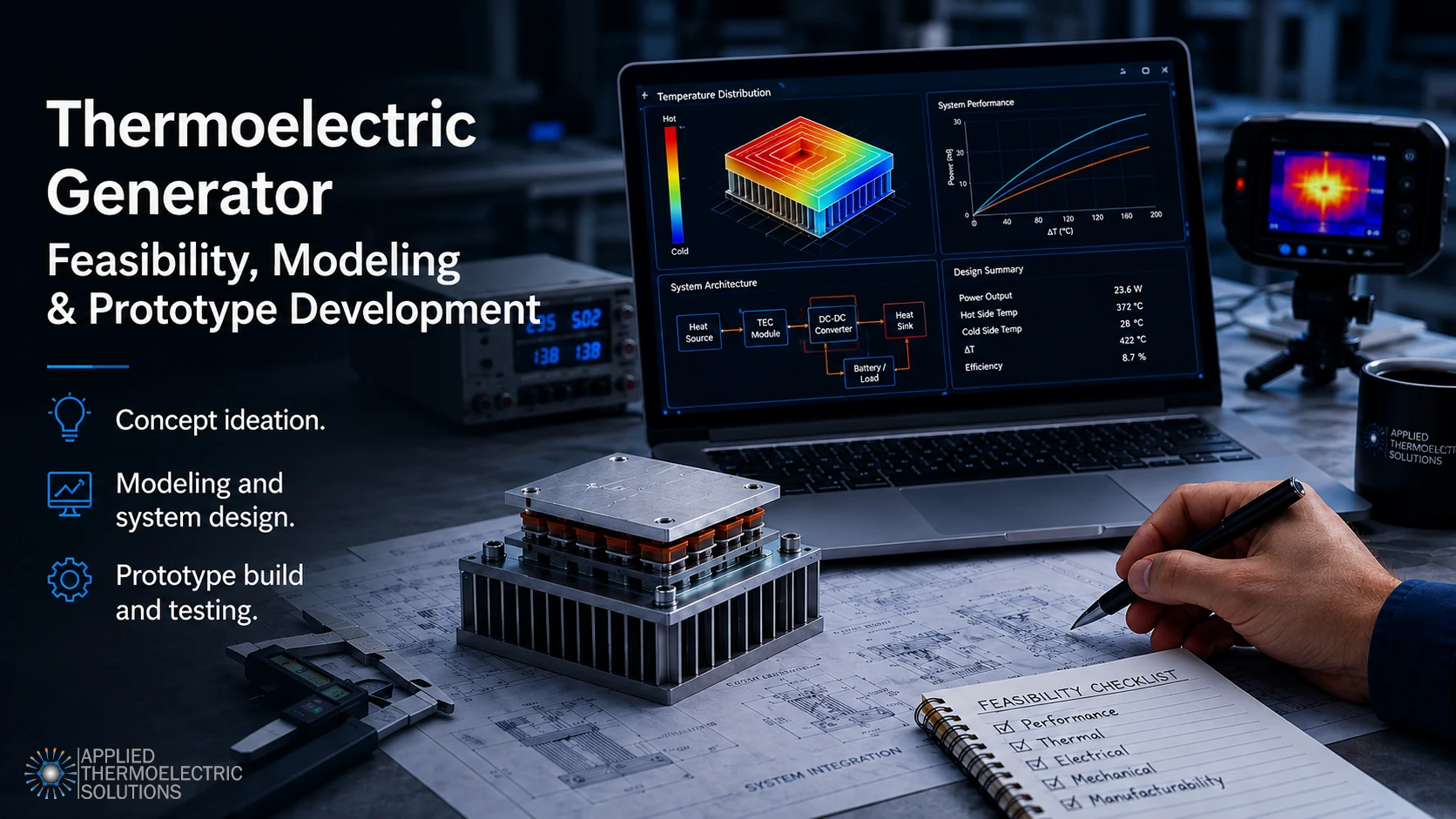
Applied Thermoelectric Solutions helps companies evaluate, model, design, build, and test custom thermoelectric generator prototypes for waste heat recovery, remote power, energy harvesting, and specialized power-generation applications.
Getting a thermoelectric generator module to produce voltage is usually not the hard part. The hard part is getting the full thermal, electrical, mechanical, and control system to meet real product requirements. That is where Applied Thermoelectric Solutions specializes.
A thermoelectric generator concept may look promising on paper, but useful performance depends on more than selecting a module. Heat flow paths, interface resistances, cold-side rejection, electrical load matching, packaging constraints, operating conditions, and system integration all affect whether the final system can produce useful power.
We help make that process more manageable by turning the concept into an engineering path: concept development, feasibility assessment, modeling, system design, prototype development, testing, and validation.
Applied Thermoelectric Solutions does not sell off-the-shelf thermoelectric generators or TEG modules. We provide engineering analysis, modeling, system design, prototype build, testing, and validation for companies developing or evaluating thermoelectric power-generation systems.
From Concept to Prototype, Where Modeling Fits
A thermoelectric generator project may start with a defined concept, such as recovering waste heat, powering remote electronics, or generating electricity from a temperature difference. In other cases, the starting point is less developed: a heat source, a product opportunity, an energy-harvesting idea, or a question about whether thermoelectrics could create useful power.
Applied Thermoelectric Solutions helps companies move through that process by helping shape the concept, evaluating the heat source, estimating realistic power output, comparing design paths, identifying thermal and electrical tradeoffs, designing the prototype system, building prototype hardware when appropriate, and testing performance against real requirements.
A typical development path may include:
1. Concept Ideation and Definition
Identify the power-generation opportunity, heat source, cold-side conditions, electrical load, packaging limits, operating environment, and project goals.
2. Feasibility Assessment
Estimate whether the available temperature difference, heat flow, and system constraints can support useful power generation.
3. Modeling and Simulation
Predict realistic TEG performance, including thermal resistance, module behavior, load matching, heat rejection, and operating conditions.
4. System Design Direction
Define the likely architecture, module approach, heat exchangers, interfaces, electrical conversion, mechanical integration, and test requirements.
5. Prototype Design and Build
Translate the model and system architecture into prototype hardware that can be assembled, instrumented, and tested.
6. Testing and Validation
Measure performance, compare results against predictions, identify design changes, and determine the next development step.
What Thermoelectric Modeling and Simulation Are Used For
Thermoelectric modeling and simulation are used to predict how a thermoelectric system is likely to perform under real operating conditions.
For generator design, this can include estimating power output, evaluating thermal and electrical tradeoffs, comparing design paths, and understanding whether a concept is viable before hardware is built.
This work is useful when a team needs to answer questions such as:
- Is a thermoelectric generator practical for this application?
- What level of output is realistically achievable?
- How sensitive is performance to changing conditions?
- Are we designing the right system, or just selecting a module and hoping it works?
- Is this concept worth prototyping?
Instead of relying only on datasheets, simplified assumptions, or trial-and-error testing, modeling and simulation can provide a more informed foundation for development.
Why Thermoelectric Generator Design Requires System-Level Analysis

Thermoelectric generator design is not only a module-selection exercise. The surrounding system strongly affects performance.
A basic demonstration can make a thermoelectric generator appear simple: apply a temperature difference and measure voltage. Real product development is different. The system must deliver useful output under real operating conditions, with real heat-transfer limits, packaging constraints, electrical loads, cost targets, and reliability expectations.
A generator may look promising on paper, but actual results can fall short when contact resistance, limited heat transfer, poor thermal coupling, unfavorable load conditions, or changing ambient conditions are introduced.
That is why system-level analysis matters.
For example, performance may depend on:
- available heat input and thermal stability
- hot-side and cold-side thermal resistances
- interface quality between components
- electrical load matching
- geometry and packaging limits
- transient behavior and operating variability
- manufacturability and prototype practicality
A system-level approach helps engineering teams understand whether the total design can meet output, cost, reliability, and integration goals, not just whether a module can generate voltage in isolation.
Key Factors That Affect Thermoelectric Generator Performance
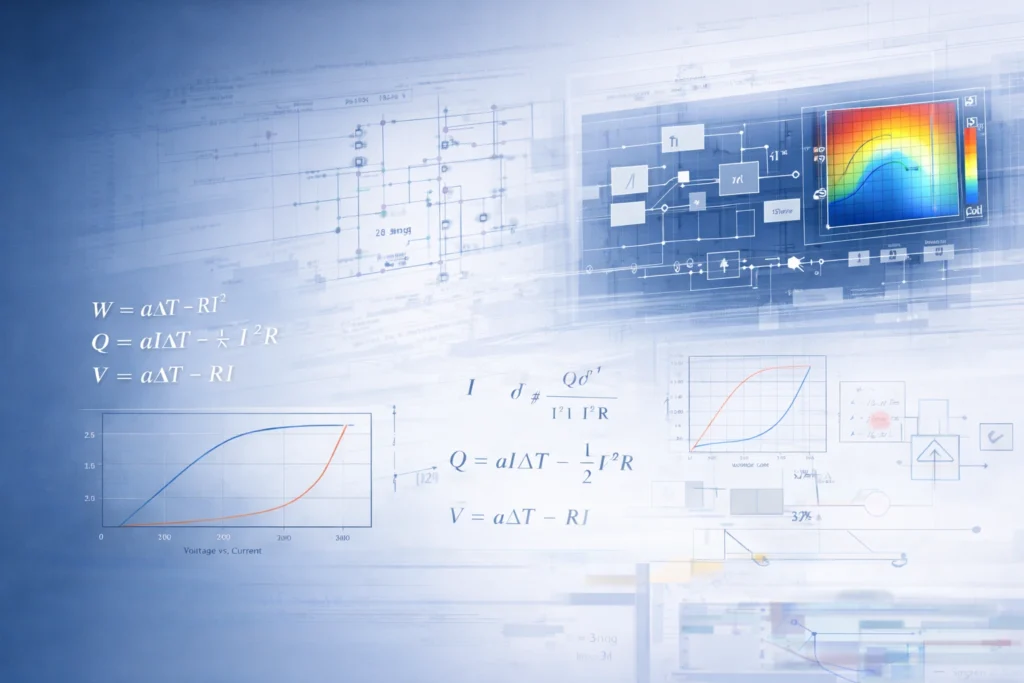
A thermoelectric generator converts a temperature difference into electrical power, but useful system performance depends on several interacting factors.
Temperature Difference
The available temperature difference is one of the main drivers of output, but the nominal source temperature alone does not tell the full story. Actual temperature drop across the thermoelectric material depends on the full thermal path.
Heat Flow and Thermal Resistance
Thermal bottlenecks in interfaces, spreaders, heat exchangers, or mounting surfaces can significantly reduce generator performance. A strong concept can underperform if heat cannot move effectively through the system.
Electrical Load Matching
Power output depends on how the generator is electrically loaded. A mismatch between the generator and the load can reduce usable output even when the thermal side appears favorable.
Geometry and Packaging
Real products have size, shape, cost, and integration constraints. A generator concept that works in a simplified model may not remain attractive once packaging and manufacturability are considered.
Operating Conditions
Many applications do not run at a single steady-state condition. Changes in source temperature, ambient temperature, heat availability, and duty cycle can all influence real-world performance.
This is why thermoelectric modeling and simulation are valuable early in development. They help teams understand not just ideal behavior, but likely behavior.
Thermoelectric Modeling and Simulation for Waste Heat Recovery
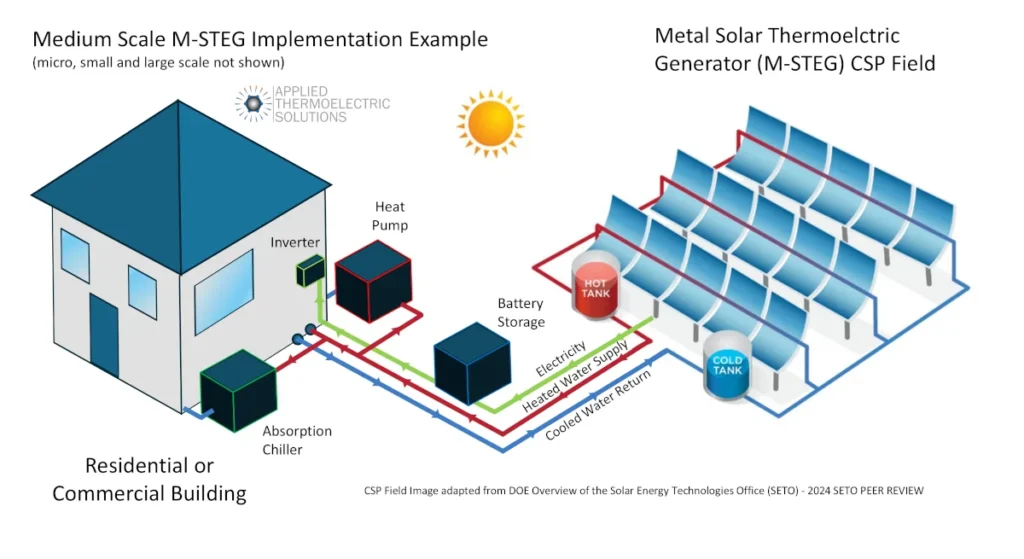
Waste heat recovery is one of the most common areas where thermoelectric generator modeling and simulation can provide value.
In principle, converting otherwise unused heat into electrical power is attractive. In practice, feasibility depends on much more than the presence of heat alone. The temperature level, available heat flow, thermal pathway, system efficiency, packaging constraints, and economics all affect whether a thermoelectric approach makes sense.
Modeling and simulation help answer questions such as:
- Is there enough usable temperature difference to justify a thermoelectric generator?
- How much electrical output is realistically possible?
- What thermal bottlenecks limit performance?
- Is this better suited to a feasibility study, a prototype, or not worth pursuing?
- What design changes could improve the concept?
For waste heat recovery applications, this kind of analysis can reduce costly dead ends and help teams focus on concepts with a more credible path forward.
Common Thermoelectric Generator Design Mistakes
Engineering teams often lose time and budget when development begins with assumptions that are too narrow or too optimistic.
Common mistakes include:
- relying only on module datasheets without system-level analysis
- assuming the full source temperature appears across the generator
- overlooking interface and heat-transfer limitations
- ignoring electrical load effects
- overestimating available output
- moving to prototype hardware before feasibility is well understood
- treating thermoelectric design as a component-selection problem rather than a system design problem
Thermoelectric modeling and simulation help reduce these mistakes by making design assumptions more visible and testable before major spending begins.
Who This Is Useful For
This type of engineering support is useful for companies and technical teams that need more than a basic module recommendation or simplified power estimate.
It is especially useful for:
- companies evaluating solid-state thermoelectric generators for a product or subsystem
- teams exploring waste heat recovery opportunities
- product development groups comparing power-generation concepts
- R&D teams that need performance prediction before prototype investment
- engineers who need a clearer understanding of thermal and electrical tradeoffs
- organizations that need system-level guidance rather than module sourcing alone
- teams that need help developing an initial concept or architecture
- teams that want to move from concept evaluation toward prototype hardware
It is especially valuable when the key question is not simply which module to buy, but whether the overall generator system can meet output, integration, reliability, manufacturability, and cost goals.
How Applied Thermoelectric Solutions Helps
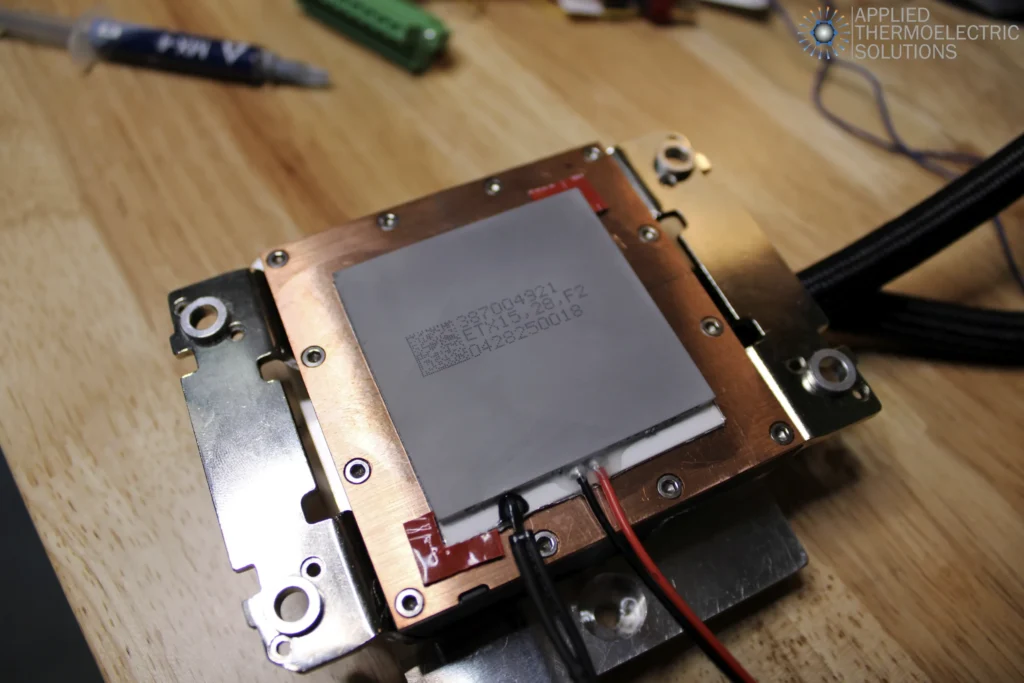
Applied Thermoelectric Solutions provides thermoelectric generator engineering support with a system-level focus.
Our role is not simply to help make a thermoelectric module produce voltage. Our role is to help determine whether the full system can meet real product requirements, and then help develop the practical path to get there.
Rather than relying only on generic module data or simplified software workflows, we help teams evaluate likely generator performance, identify design tradeoffs, and make stronger development decisions earlier.
Support may include:
- concept ideation for thermoelectric generator applications
- thermoelectric generator feasibility assessment
- thermoelectric modeling and simulation
- performance prediction
- design tradeoff analysis
- heat source and cold-side evaluation
- waste heat recovery evaluation
- module selection, comparison, or specification
- system architecture development
- heat exchanger and thermal interface evaluation
- electrical load matching and power-conditioning review
- prototype-oriented design
- custom prototype build
- prototype testing and validation
Our goal is to make the development path clearer and easier for the customer by reducing uncertainty, identifying weak points early, and supporting the move from concept to practical prototype when the application justifies it.
Need Help Developing or Evaluating a Thermoelectric Generator Concept?
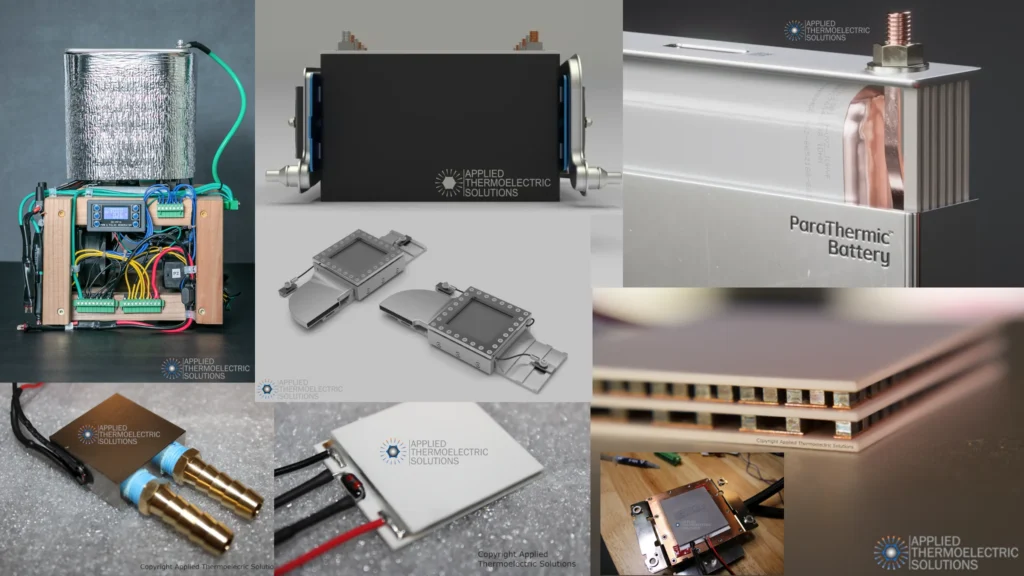
If you are exploring a thermoelectric generator for waste heat recovery, remote power, energy harvesting, product integration, or another power-generation application, Applied Thermoelectric Solutions can help you develop the concept, evaluate feasibility, estimate likely performance, compare design tradeoffs, design and build prototype hardware, and test performance against real application requirements.
Frequently Asked Questions about Thermoelectric Modeling and Simulation for Generator Design
What is thermoelectric modeling?
Thermoelectric modeling is the use of engineering models to predict how a thermoelectric system will behave under expected operating conditions. It can be used to evaluate heat flow, electrical behavior, system tradeoffs, and likely performance before building hardware.
What is thermoelectric simulation used for?
Thermoelectric simulation is used to estimate system performance, compare design options, identify thermal and electrical bottlenecks, and reduce development risk before prototype testing.
Why is thermoelectric generator simulation important?
Thermoelectric generator simulation is important because real performance depends on more than module specifications. Heat transfer, interface resistance, electrical load conditions, and system integration can all affect output.
Can thermoelectric modeling help with waste heat recovery?
Yes. Thermoelectric modeling can help determine whether a waste heat recovery concept is likely to be practical, what output may be achievable, and which system factors may limit performance.
Does a thermoelectric generator need system-level design analysis?
Yes. Thermoelectric generator performance depends on the full thermal and electrical system, not just the module itself. System-level analysis helps teams make better design decisions and avoid unrealistic expectations.
When should a company use thermoelectric modeling and simulation?
These tools are most useful early in development, when a team needs to evaluate feasibility, predict performance, compare design paths, or decide whether a concept is worth prototyping.
Can Applied Thermoelectric Solutions help with thermoelectric generator development?
Yes. Applied Thermoelectric Solutions supports engineering teams with thermoelectric modeling, simulation, feasibility evaluation, design tradeoff analysis, and generator development guidance.
Can Applied Thermoelectric Solutions build thermoelectric generator prototypes?
Yes. Applied Thermoelectric Solutions can help with thermoelectric generator prototype development, including concept development, system design, modeling, prototype build, test planning, performance testing, and validation, depending on the project requirements.
Links that May Interest You
- Custom Thermoelectric Solutions
- Thermoelectric Design and Simulation Services
- Thermoelectric System Development
- Our Thermoelectric Cooling and Generator Work
- Thermoelectric Cooling Prototype Case Study
- Solar Thermoelectric Generator Case Study
- How Thermoelectric Cooling Works
- How Thermoelectric Generators Work
- ParaThermic® Battery Thermal Management Technology
- VoltaTherm® Battery Thermal Management System (BTMS)
- PowerBeam™ Wireless Power Transfer Technology
- Battery Thermal Management | After Immersion Cooling