Thermoelectric Design and Simulation Services
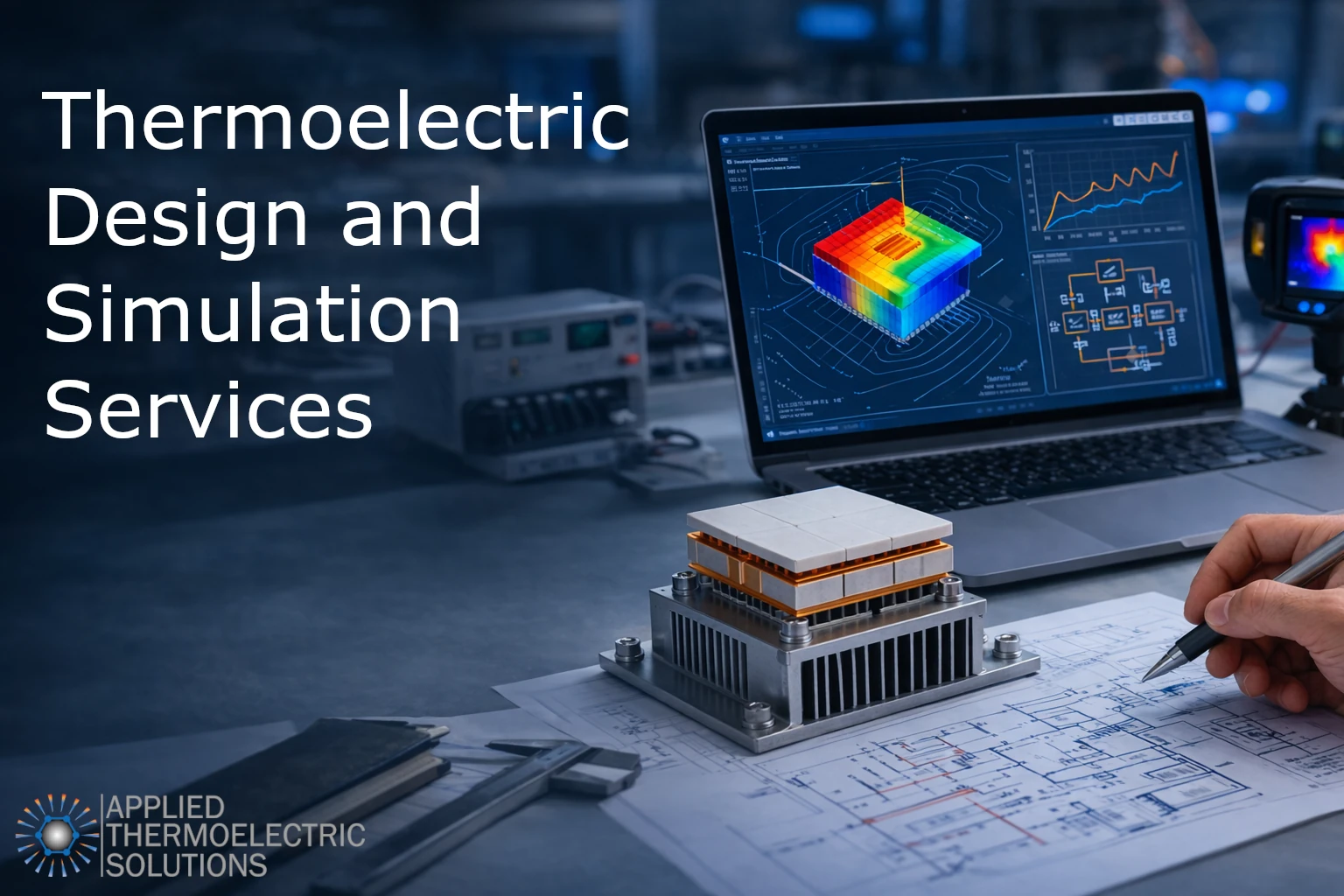
Thermoelectric design and simulation services help product teams answer a critical question early: is thermoelectric technology practical for this application, and if so, what system approach makes the most sense?
Applied Thermoelectric Solutions helps companies evaluate, model, design, build, test, and validate thermoelectric cooling, heating, and power-generation systems. We support engineering teams that need more than a module datasheet or supplier catalog recommendation.
Our work can support feasibility review, system-level thermal and electrical modeling, module selection or specification, performance prediction, thermal and mechanical integration, prototype design and build, testing, and validation. The goal is to reduce uncertainty, lower development risk, and move toward a more practical solution before expensive prototype iterations.
When This Service Is the Right Fit
Applied Thermoelectric Solutions is a good fit when you need engineering support for a thermoelectric system, not just a module part number.
We are a good fit when:
- you need help determining whether thermoelectrics are practical for your application
- you need modeling before committing to hardware
- you need help selecting, specifying, or integrating thermoelectric modules
- you are comparing cooling, heating, or power-generation design approaches
- your current thermoelectric design is not meeting performance targets
- you need prototype design, build, testing, or validation
- you are evaluating a new concept, system architecture, or design path
Applied Thermoelectric Solutions is not the right source if you only need to purchase a standalone module, repair part, hobby kit, or low-cost Peltier cooler.
Applications and Engineering Scenarios We Commonly Evaluate
Applied Thermoelectric Solutions supports design, simulation, feasibility, and consulting work across thermoelectric cooling, heating, and power-generation applications. This page is for companies that need engineering judgment before committing to hardware, supplier selection, or prototype investment.
Thermoelectric Design, Simulation, and Feasibility
Evaluation of thermoelectric system concepts before hardware is built, including feasibility analysis, thermal and electrical modeling, module selection, system architecture, heat rejection requirements, power requirements, and predicted cooling or power-generation performance.
Thermoelectric Consulting and Second Opinions
Technical review of thermoelectric concepts, Peltier or TEG designs, supplier recommendations, underperforming systems, or difficult applications where internal teams need expert guidance before choosing a design direction.
Thermal Management and Thermal Engineering Support
System-level support for thermal bottlenecks, temperature-control challenges, heat spreading, heat rejection, electronics cooling, enclosure thermal management, instrument cooling, and applications where thermoelectrics need to be compared against air, liquid, passive, or other cooling methods.
Thermoelectric R&D and Prototype Planning
Support for early-stage concepts, exploratory R&D, performance modeling, prototype design, prototype build, test planning, validation, and moving from an idea toward practical engineered hardware.
Power-Generation and Waste-Heat Concepts
Thermoelectric generator feasibility, waste heat to power modeling, power-output estimates, thermal architecture review, module strategy, and proof-of-concept planning for applications that use a temperature difference to generate electrical power.
Product and Equipment Applications
Examples include custom thermoelectric cooling systems, Peltier/TEC system design, precision temperature control, electronics and enclosure thermal management, instrument and lab equipment cooling, battery thermal management concept evaluation, custom thermoelectric assemblies, prototype thermoelectric systems, and thermal modeling or system simulation.
Thermoelectric Engineering Support for Real Product Decisions
Developing a thermoelectric product or application can become expensive very quickly when the path forward is based on trial and error. A concept may appear promising, but actual performance depends on much more than the module alone. System architecture, heat rejection, electrical conditions, packaging, operating environment, controls, and cost constraints all affect whether a design will succeed.
That is why thermoelectric design and simulation matter before major prototype design, build, and test spending begins.
Applied Thermoelectric Solutions helps engineering teams evaluate these questions with a system-level approach. Instead of relying only on generic module data or guess-and-check testing, we help clients understand likely performance, identify tradeoffs, and make smarter design decisions earlier in development.
Who This Service Is For
This service is for companies and technical teams that need engineering clarity before
committing to a thermoelectric product path.
• OEMs evaluating thermoelectrics for a product or subsystem
• product development teams comparing design options
• R&D groups exploring new thermal or power-generation concepts
• engineers determining whether thermoelectrics are practical for a specific application
• teams that need system-level design support rather than just module sourcing
It is especially useful when the key question is not simply which module to buy, but
whether the overall system can meet performance, power, packaging, reliability, and
cost targets.
Applied Thermoelectric Solutions helps engineering teams evaluate these questions with
a system-level approach. Instead of relying only on generic module data or guess-and-check testing, we help clients understand likely performance, identify tradeoffs, and make smarter design decisions earlier in development.
Looking for a Thermoelectric Supplier or Engineering Partner?
A thermoelectric module supplier can be the right choice when you already know the module you need and only need to purchase a part.
Many product-development projects require more than that. The real question may be which system architecture is appropriate, how the module will be integrated into the system, how heat will be moved and rejected, how the system will be controlled, and whether the predicted performance is realistic.
Applied Thermoelectric Solutions is not tied to one module supplier or brand. We can help evaluate standard modules, custom module requirements, supplier options, and system-level design tradeoffs based on the application.
Client Perspective
“Applied Thermoelectric Solutions went above and beyond by not only reviewing and refining the thermoelectric components but also providing invaluable feedback on the overall product design.
Their expertise helped optimize various aspects of the technology, from the initial concept to practical implementation.”
Finn Aretz
Technical consulting review for thermoelectric power-generation technology
What Our Thermoelectric Design and Simulation Services Can Include
Depending on the project, our support typically falls into four areas.
Feasibility, Concepts, and System Architecture
- thermoelectric application feasibility studies
- system architecture and design-path evaluation
- comparison of cooling, heating, or power-generation approaches
- evaluation of module requirements for the customer’s architecture
- battery thermal management concept evaluation
Modeling, Simulation, and Performance Prediction
- thermoelectric design and simulation
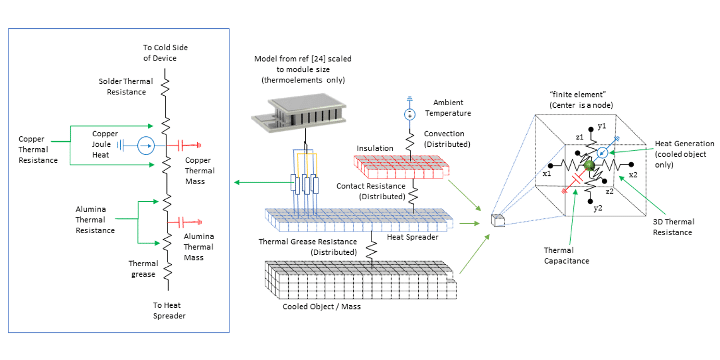
- system-level thermal and electrical modeling
- performance prediction across operating conditions, ambient conditions, and system architectures
- thermoelectric cooling, heating, and power-generation analysis
- thermoelectric generator system evaluation
- transient thermoelectric pulse cooling modeling for short-duration cooling applications
Module Selection and System Integration
- module selection, comparison, specification, or integration guidance
- heat rejection, packaging, controls, and electrical power tradeoff analysis
- optimization of thermal, electrical, and mechanical design factors
- integration planning for real product or prototype requirements
Prototype Direction, Troubleshooting, and Validation
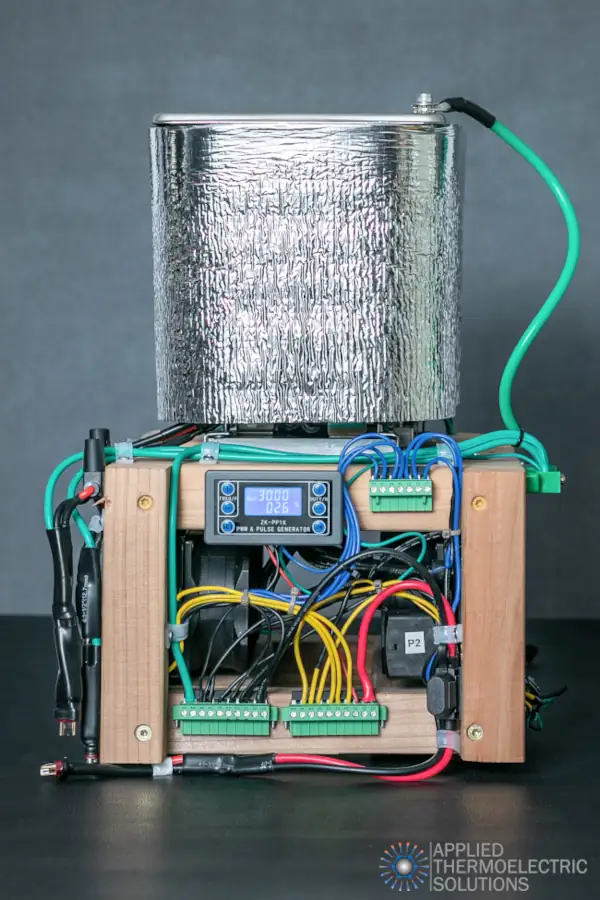
- prototype design and development direction
- prototype build support or prototype build execution, depending on project scope
- test planning, performance testing, and validation
- troubleshooting customer thermoelectric concepts or prototypes that are underperforming
- review and recommendations for customer designs that are not meeting performance targets
- support for moving from concept to practical prototype hardware
The exact scope depends on your goals, product, performance targets, operating conditions, and stage of development.
What This Work Helps You Decide

Thermoelectric modeling and simulation are valuable because they help answer important engineering and business questions before time and money are spent on the wrong prototype path.
- whether thermoelectrics are a practical fit for the application
- what performance is realistically achievable
- how operating conditions affect system behavior
- whether the design is likely to be overdesigned or underdesigned
- which module and system architecture are more appropriate
- where the main thermal bottlenecks or integration risks are
- whether a concept is ready for prototype design, build, and testing
- how to reduce unnecessary prototype iterations
A more informed early-stage decision process can lower development risk and improve the likelihood of a successful outcome.
Why Use Thermoelectric Design and Simulation Before Prototyping
Reduce costly trial and error
Physical prototypes are important, but relying on them too early as the main design tool can be slow and expensive. Simulation can help narrow the design space before build-and-test cycles consume time and budget.
Predict performance with greater confidence
A thermoelectric system does not operate in isolation. Modeling can help estimate how the design will behave under real operating conditions and how design changes are likely to affect results.
Support better design tradeoffs
Thermoelectric performance is shaped by many interacting variables. Simulation helps compare options more deliberately instead of selecting a path based mainly on convenience or guesswork.
Improve development efficiency
Better early-stage analysis can reduce unnecessary part purchases, repeated builds, and avoidable redesign work.
Move toward a more practical prototype path
The goal is not modeling for its own sake. The goal is to help move the project toward prototype hardware that is better defined, easier to test, and more likely to answer the right engineering questions.
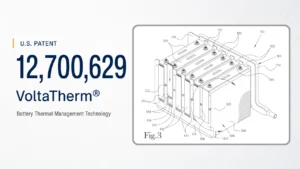
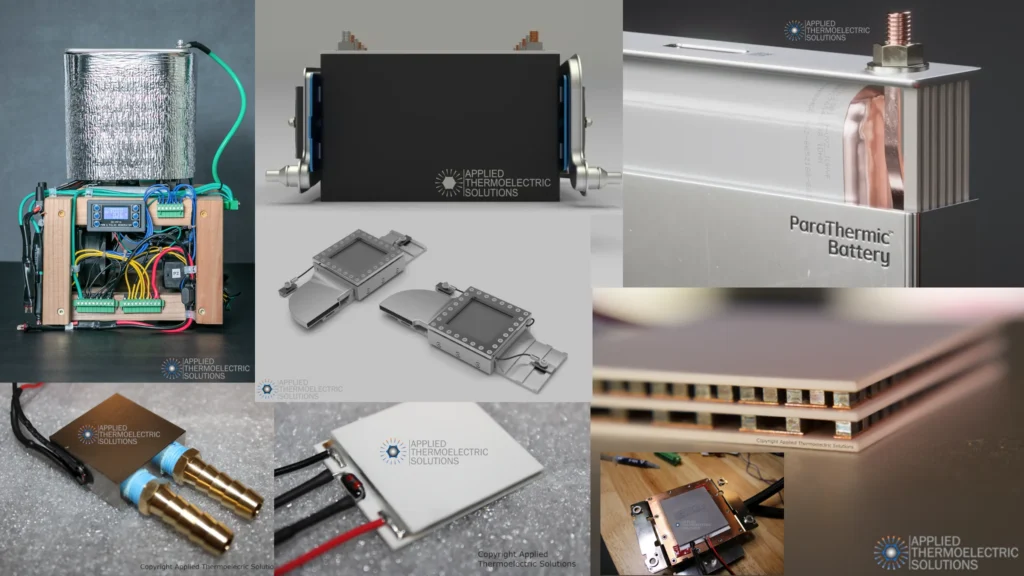
Applied Thermoelectric Solutions’ experience includes battery-related thermoelectric system concepts, including an earlier graphite thermoelectric battery thermal management patent involving heat spreading, resistive heating, thermoelectric cooling, and integrated thermal system design.
Why Work With Applied Thermoelectric Solutions
Applied Thermoelectric Solutions is focused on thermoelectric and system-level thermal engineering. We work on thermoelectric cooling, heating, and power-generation challenges with an emphasis on practical product and application decisions.
Our role is not simply to point to a catalog module. We help clients evaluate the broader system and the engineering tradeoffs that determine whether a concept is viable.
Applied Thermoelectric Solutions can be a strong fit when you need:
- specialized thermoelectric expertise
- system-level engineering perspective
- support evaluating feasibility before major prototype expense
- guidance on design, modeling, and optimization
- prototype design, build, testing, and validation support
- an engineering partner focused on practical development outcomes
When to Engage Us
- you are evaluating a new thermoelectric concept
- you are unsure whether thermoelectrics are practical for your application
- an existing design is underperforming
- prototype design, build, or test iterations are becoming costly or slow
- you want to compare multiple design paths before building
- you need help selecting a better technical direction
- conventional engineering approaches proved insufficient
Engaging earlier can often improve thermoelectric prototype development efficiency by helping identify weak design paths before they absorb more build time, test time, and budget.
Technical Recognition
Applied Thermoelectric Solutions brings more than catalog-level thermoelectric support. Our work is grounded in applied thermoelectric engineering, system design, modeling, and practical product-development experience.
Recognition includes peer-reviewed technical work, an Editors’ Choice award, open-innovation recognition, and invitation to judge the NASA Tech Briefs Create the Future Design Contest.
Need Help Evaluating a Thermoelectric Concept or Design Path?
Need help determining whether thermoelectric cooling, heating, or power generation is practical for your application?
Applied Thermoelectric Solutions can help evaluate your application, performance targets, constraints, module options, and system architecture before you commit to expensive prototype design, build, and testing.
We can also help move promising concepts from analysis and system architecture into prototype hardware, performance testing, and validation when the application justifies it.
Frequently Asked Questions About Thermoelectric Design and Simulation Services
What are thermoelectric design and simulation services?
Thermoelectric design and simulation services help companies evaluate whether thermoelectric technology is practical for a product or application before committing to expensive prototype iterations. This work can include feasibility studies, system-level modeling, performance prediction, design tradeoff analysis, optimization, prototype design, prototype build, testing, and validation.
When should a company use thermoelectric design and simulation?
These services are most useful early in development, when a team needs to understand whether thermoelectrics are a good fit, what performance is realistic, and which design path makes the most sense. They are also valuable when an existing concept is underperforming or when prototype iterations are becoming too costly or time-consuming.
What kinds of decisions can thermoelectric simulation support?
Thermoelectric simulation can help support decisions such as whether thermoelectrics are practical for the application, what performance is achievable, how operating conditions affect results, which module and system architecture are more appropriate, where thermal bottlenecks exist, and whether a concept is ready for prototyping.
Can thermoelectric simulation reduce prototype cost and development risk?
Yes. Simulation can help reduce trial-and-error development by identifying weak design paths earlier, narrowing the design space before hardware is built, and improving confidence in feasibility and performance expectations before significant prototype spending begins.
Does Applied Thermoelectric Solutions only model thermoelectric modules?
No. Applied Thermoelectric Solutions focuses on system-level engineering support. That means the work can consider not only the thermoelectric module, but also the surrounding thermal, electrical, mechanical, and application-specific factors that determine how the full system will perform.
Can these services support both thermoelectric cooling and power generation?
Yes. Thermoelectric design and simulation services can support thermoelectric cooling, heating, and power-generation applications. The exact scope depends on the product, operating conditions, performance targets, and stage of development.
Is thermoelectric design and simulation useful if we have already built a prototype?
Yes. Thermoelectric design and simulation can be useful after a prototype has been built, especially when the system is underperforming, the root cause is unclear, or the next design, build, and test iteration needs better engineering direction before more hardware is built.
What is the advantage of working with a specialized thermoelectric engineering partner?
A specialized engineering partner can help evaluate thermoelectric-specific design tradeoffs that are easy to miss when relying only on generic data sheets, trial-and-error testing, or broader thermal engineering assumptions. This can improve development efficiency and lead to more practical design decisions earlier in the process.
Links that May Interest You
- Custom Thermoelectric Solutions
- Thermoelectric Design and Simulation Services
- Thermoelectric System Development
- Our Thermoelectric Cooling and Generator Work
- Thermoelectric Cooling Prototype Case Study
- Solar Thermoelectric Generator Case Study
- How Thermoelectric Cooling Works
- How Thermoelectric Generators Work
- ParaThermic® Battery Thermal Management Technology
- VoltaTherm® Battery Thermal Management System (BTMS)
- PowerBeam™ Wireless Power Transfer Technology
- Battery Thermal Management | After Immersion Cooling