Thermoelectric Module Optimization | Efficiency, Design & Operation
Thermoelectric module optimization is the process of selecting, designing, or operating a thermoelectric module so it performs effectively within the full thermal, electrical, mechanical, and cost constraints of a real system.
The best thermoelectric module on paper is not always the best module in a product. Cooling power, COP, input current, voltage, heat rejection, module geometry, interface resistance, control strategy, packaging, and cost all interact. A module that performs well under one set of conditions may perform poorly when the heat sink, power supply, enclosure, operating temperature, or control strategy changes.
Applied Thermoelectric Solutions helps companies evaluate these tradeoffs before committing to prototypes, custom modules, or system architecture decisions. The goal is to reduce trial and error and improve the chance that the thermoelectric system will meet its performance targets.
What Is Thermoelectric Module Optimization?
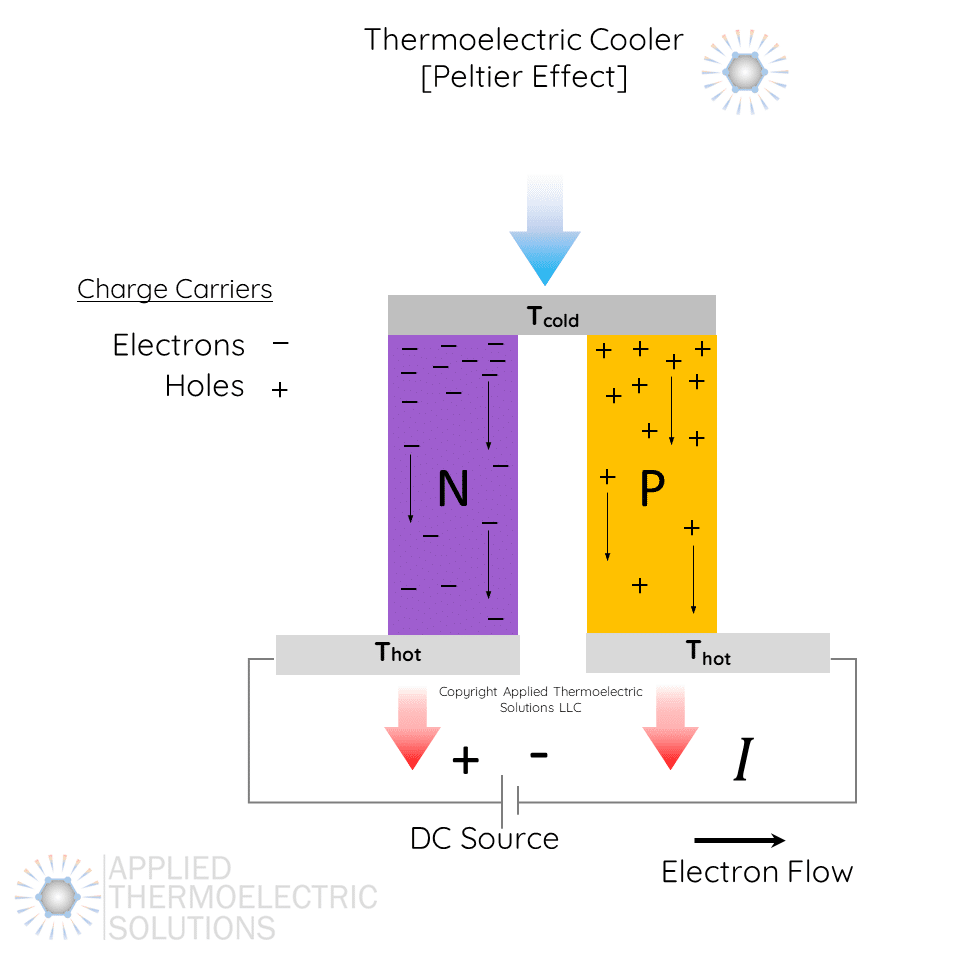
Thermoelectric module optimization is the process of improving module performance for a specific engineering objective. That objective may be maximum cooling power, higher efficiency, lower power consumption, lower cost, smaller size, improved temperature control, or better performance at a particular temperature difference.
For thermoelectric cooling systems, optimization often focuses on cooling capacity, COP, power input, current, voltage, hot-side heat rejection, cold-side temperature, and package constraints. For thermoelectric generator systems, optimization may focus on power output, temperature difference, module loading, thermal contact resistance, and the available heat source and heat sink.
In both cases, module optimization should not be treated as an isolated calculation. The thermoelectric module, heat exchangers, electrical input, controls, mechanical package, and operating conditions must work together.
Two Types of Thermoelectric Module Optimization

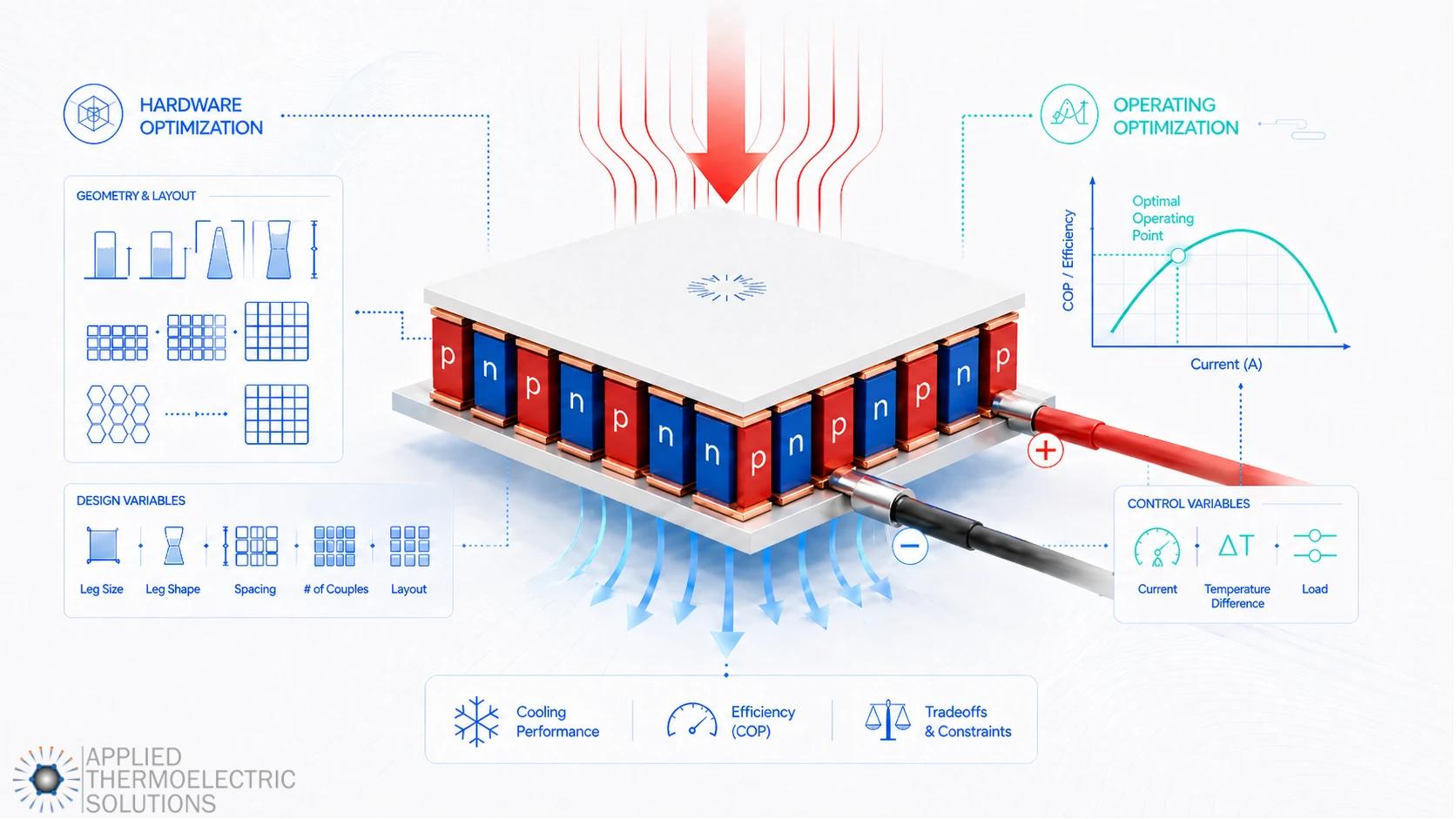
Thermoelectric module optimization can mean two different things. In some cases, the physical module hardware is being optimized. In other cases, an existing module is being operated at an optimized electrical condition inside a larger system.
Both are important, but they are not the same engineering problem.
Hardware Optimization
Hardware optimization focuses on the physical design of the thermoelectric module itself. This can include the number of semiconductor couples, the size and shape of the semiconductor legs, the spacing between elements, the module footprint, ceramic dimensions, electrical resistance, thermal conductance, and material usage.
A hardware-optimized module may be designed for a specific priority, such as maximum cooling power, higher efficiency, lower current, lower cost, smaller size, or better performance at a particular temperature difference.
For example, changing the number of thermoelectric couples, the leg height, or the leg cross-sectional area can change the balance between electrical resistance, heat pumping capacity, thermal back-conduction, and current requirements. These choices affect not only the module, but also the power supply, heat sink, controls, and packaging.
Hardware optimization is especially important when off-the-shelf modules cannot meet the requirements of a product or prototype.
Operating Optimization
Operating optimization focuses on how a thermoelectric module is driven in the system. Even a well-designed module can perform poorly if it is operated at the wrong current or paired with at high temperature difference.
The optimal operating current depends on the desired cooling load or power output, hot-side temperature, cold-side temperature, available heat sink capacity, temperature difference, control strategy, and system limits.
For thermoelectric cooling, operating at too much current can increase Joule heating and reduce COP. In some cases, adding more current produces little useful cooling benefit while increasing power consumption and heat rejection requirements. For thermoelectric generators, the best operating point depends on the thermal conditions and electrical load.
This is why thermoelectric module efficiency cannot be judged only from the module datasheet. The operating point matters.
Why Thermoelectric Module Efficiency Depends on the System
Thermoelectric module efficiency is not determined by the module alone. It depends on how the module is designed, how it is operated, and how well the surrounding system supports heat transfer on both sides of the module.
For thermoelectric cooling, the same Peltier module can perform very differently depending on current, temperature difference, hot-side heat rejection, cold-side heat transfer, interface resistance, insulation, and control strategy. A module that appears inefficient in one system may perform much better when the operating point and heat rejection path are properly optimized.
Thermoelectric efficiency depends on several interacting factors, including:
- module design
- current supplied to the module
- temperature difference across the module
- hot-side heat sink performance
- cold-side heat transfer
- thermal interface resistance
- insulation and parasitic heat loads
- control strategy
- duty cycle
- packaging constraints
A module can only perform well if the surrounding system allows it to operate near a useful point. Poor heat rejection, excessive interface resistance, undersized heat sinks, or incorrect current control can make an otherwise appropriate module look inefficient.
Optimizing Thermoelectric Cooling Modules
For thermoelectric cooling, optimization is usually a balance between cooling power, temperature lift, COP, input power, system size, cost, and heat rejection.
A module selected only for maximum cooling capacity may not provide the best system result. Larger modules or higher current levels can increase heat pumping capacity, but they also increase electrical input power and hot-side heat rejection. If the hot-side heat sink cannot remove that combined heat load, the hot-side temperature rises and cooling performance decreases.
Important cooling optimization questions include:
- What cooling load must be removed?
- What cold-side temperature is required?
- What hot-side temperature is realistic?
- What temperature difference must the module operate across?
- What current provides the best balance of cooling and COP?
- Is the heat sink or liquid loop large enough?
- How much electrical power is acceptable?
- Is the module being optimized for steady-state cooling, cooldown time, or temperature control?
- Are condensation, insulation, and parasitic heat leaks included?
- Is the heat load transient or steady-state?
This is where thermoelectric module optimization becomes a system-level design problem. The module, power supply, heat sink, fan or liquid loop, enclosure, insulation, and controls all affect the result.
Optimizing Thermoelectric Generator Modules
Thermoelectric generator modules can also be optimized, but the design objective is different. Instead of using electrical power to move heat, a thermoelectric generator uses a temperature difference to produce electrical power.
TEG module optimization may involve module geometry, thermal conductance, electrical resistance, heat source temperature, heat sink temperature, thermal contact resistance, and electrical load matching.
For generator applications, a module should not be evaluated only by its peak efficiency or open-circuit voltage. The practical power output depends on the heat source, heat sink, available temperature difference, thermal interfaces, module loading, and system economics.
Module Optimization vs. System Optimization
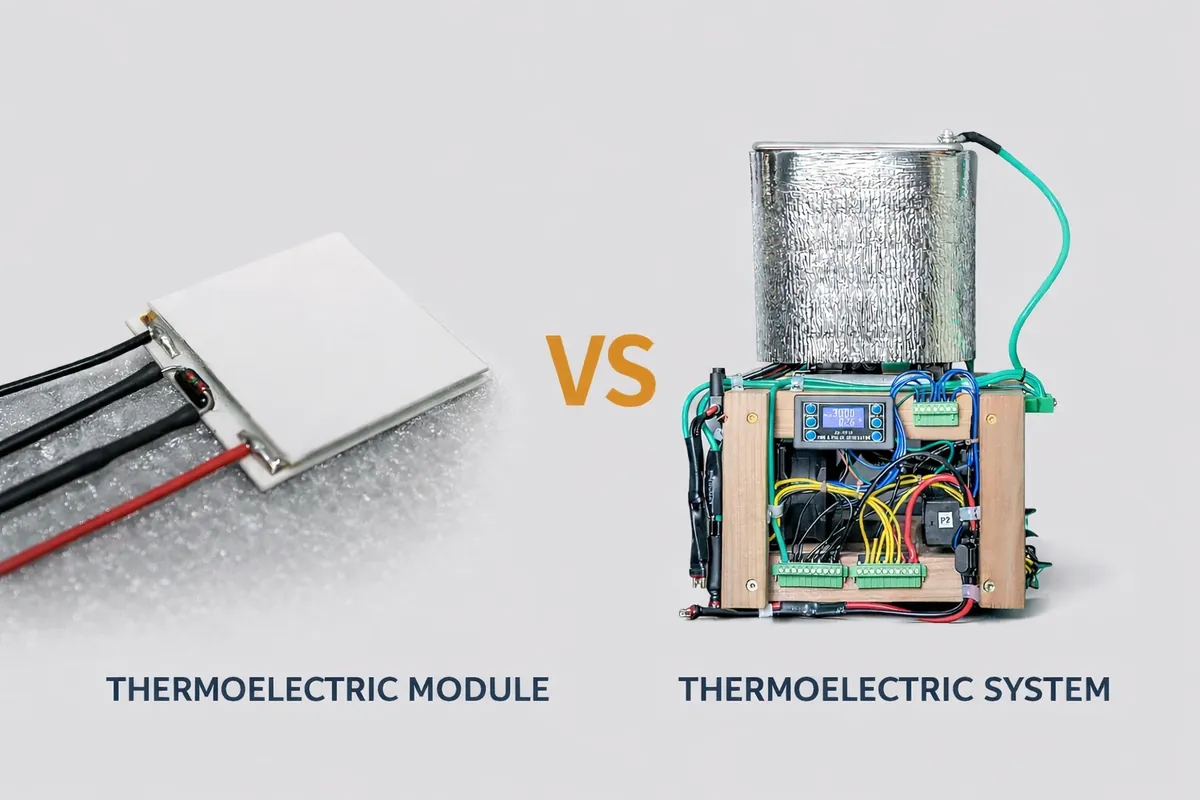
Thermoelectric module optimization is important, but it is only one part of a successful thermoelectric system.
A module can be optimized and still fail to meet the product requirement if the rest of the system is not designed properly. For example, the system may be limited by heat sink performance, airflow, liquid flow rate, contact resistance, insulation, condensation, power supply limits, mechanical constraints, or control behavior.
That is why Applied Thermoelectric Solutions approaches thermoelectric optimization as a system-level engineering problem. The module is evaluated together with the thermal path, electrical input, controls, mechanical package, operating environment, and business constraints.
The goal is not simply to find a theoretically optimal module. The goal is to find a practical design direction that can work in the final application.
Why Computer Optimization Still Requires Engineering Judgment
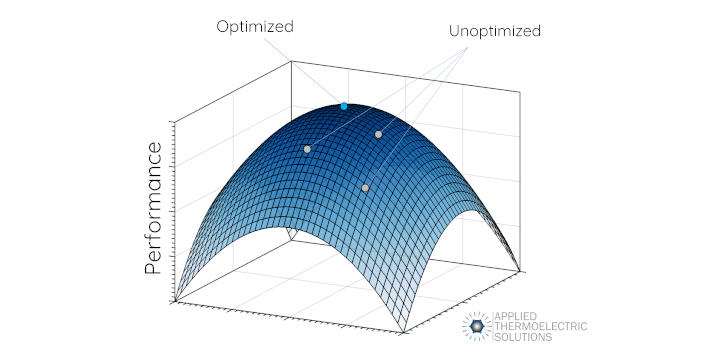
Computer optimization is a powerful tool for thermoelectric design. It can compare module geometries, operating currents, heat sink assumptions, temperature targets, and cost tradeoffs much faster than manual trial and error.
However, optimization software does not replace an experienced engineer. The quality of the result depends on the assumptions used in the model. If the heat load, boundary conditions, thermal contact resistance, airflow, coolant temperature, control strategy, or packaging constraints are wrong, the optimized result may not match the real system.
Experienced engineering judgment is needed to define the problem correctly, interpret the results, check whether assumptions are realistic, and understand which tradeoffs matter most for the product.
The strongest results usually come from combining simulation and optimization with practical thermoelectric system experience.
How Applied Thermoelectric Solutions Helps With Thermoelectric Module and System Optimization
Applied Thermoelectric Solutions helps companies evaluate thermoelectric module and system tradeoffs before they invest heavily in prototypes, custom modules, tooling, or product architecture.
Applied Thermoelectric Solutions can support:
- thermoelectric module selection
- Peltier module efficiency analysis
- operating current optimization
- custom module design tradeoff studies
- heat sink and liquid loop evaluation
- thermal interface and contact resistance analysis
- thermoelectric cooling system modeling
- thermoelectric generator feasibility analysis
- prototype design support
- performance troubleshooting
- system-level thermoelectric design reviews
- challenges that demand more than standard engineering
Because Applied Thermoelectric Solutions is module-agnostic, the goal is not to force a specific module into the design. The goal is to identify the module, operating point, and system architecture that best fit the application.
Discuss a Thermoelectric Optimization Challenge
If you are evaluating a thermoelectric cooling or thermoelectric generator design, ATS can help determine whether the module, operating current, heat rejection strategy, and system architecture are aligned with your performance goals.
Contact Applied Thermoelectric Solutions to discuss your thermoelectric module optimization challenge.
Frequently Asked Questions About Thermoelectric Module Optimization
What is thermoelectric module optimization?
Thermoelectric module optimization is the process of improving module performance for a specific objective, such as higher cooling power, better efficiency, lower input power, lower cost, or improved performance at a required temperature difference.
What is the difference between hardware optimization and operating optimization?
Hardware optimization changes the physical module design, such as the number of semiconductor couples, leg size, leg shape, spacing, and module layout. Operating optimization changes how the module is used, especially the electrical current, voltage, control strategy, and operating temperature conditions.
Does the most efficient Peltier module always provide the best cooling system?
No. The best module depends on the cooling load, temperature difference, heat sink performance, input power limits, packaging constraints, and cost targets. A module with good datasheet performance may not be the best choice for a specific system.
Can thermoelectric module optimization reduce power consumption?
Yes, in many cases. Operating a thermoelectric module at the wrong current can waste power and increase hot-side heat rejection. Optimizing the current, module selection, and heat sink design can improve the balance between cooling performance and power consumption.
Can thermoelectric generator modules be optimized too?
Yes. Thermoelectric generator modules can be optimized for power output, efficiency, thermal conductance, electrical resistance, temperature difference, and load matching. The best result depends on the heat source, heat sink, module design, and electrical load.
Links that May Interest You
- Custom Thermoelectric Solutions
- Thermoelectric Design and Simulation Services
- Thermoelectric System Development
- Our Thermoelectric Cooling and Generator Work
- Thermoelectric Cooling Prototype Case Study
- Solar Thermoelectric Generator Case Study
- How Thermoelectric Cooling Works
- How Thermoelectric Generators Work
- ParaThermic® Battery Thermal Management Technology
- VoltaTherm® Battery Thermal Management System (BTMS)
- PowerBeam™ Wireless Power Transfer Technology
- Battery Thermal Management | After Immersion Cooling