
How Thermoelectric Generators Work: Practical Power, Efficiency, and Applications
The Author – Founder and CTO

Alfred Piggott is the Founder and CTO of Applied Thermoelectric Solutions, specializing in thermoelectrics, battery thermal management, and energy conversion. With more than 30 years of engineering experience, he develops advanced cooling, power generation, and high-heat-transfer battery technologies. Alfred holds multiple patents, has published award-winning research, and shares practical insights from ongoing modeling, system development, and prototype build work.
Table of Contents
This guide explains how thermoelectric generators work in real systems, what limits performance, and how to evaluate whether the technology fits your application.
How Thermoelectric Generators Work in Practice
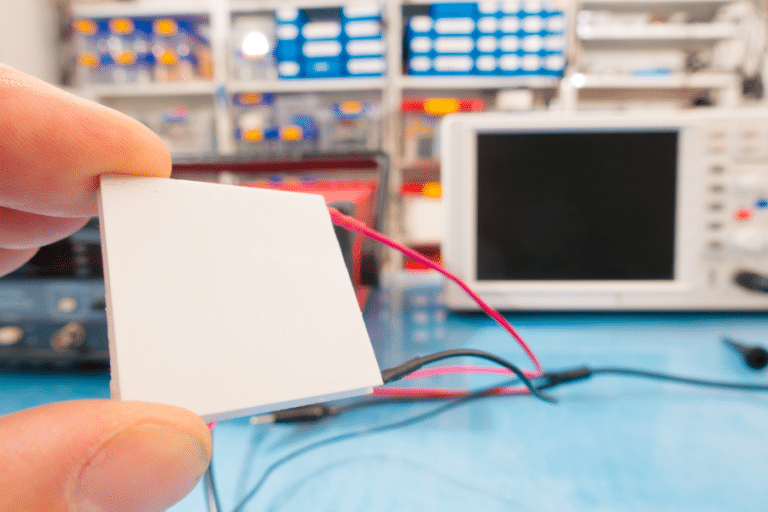
Thermoelectric generators (TEGs) are solid-state semiconductor devices that convert heat flow and a temperature difference into usable DC electrical power. When one side of the generator is heated and the other side is kept cooler, the temperature difference across the internal p-type and n-type semiconductors produces a voltage through the Seebeck effect. That voltage drives current through an electrical load, producing power.
In deployed systems, TEG performance is usually limited less by the Seebeck effect itself and more by heat transfer into and out of the module, electrical load matching, and system integration.
This guide is for engineers, scientists, and product developers evaluating thermoelectric power generation for real hardware. It explains how TEGs work, what determines power output and efficiency, and the system-level tradeoffs that control achievable performance.
Is a Thermoelectric Generator the Same as a Thermoelectric Cooler?
A thermoelectric generator (TEG) converts heat into electrical power using the Seebeck effect. A thermoelectric cooler (TEC) uses electrical power to move heat using the Peltier effect.
A thermoelectric generator is not the same as a thermoelectric cooler.
(also known as a TEC, Peltier module, cooling chip, or solid-state cooling device)
A thermoelectric cooler works in reverse of a thermoelectric generator.
When a voltage is applied to a thermoelectric cooler, an electrical current is produced. This current induces the Peltier effect. With this effect, heat is moved from the cold side to the hot side.
A thermoelectric cooler is also a solid-state semiconductor device. The components are the same as a thermoelectric generator, but the design of the components in most cases differs.
While thermoelectric generators are used to produce power, thermoelectric coolers (Peltier coolers) are used for removing or adding heat.
Thermoelectric cooling has many applications in cooling, heating, refrigeration, temperature control, and thermal management.
The focus of the rest of this post is thermoelectric generators.
For a wealth of information about thermoelectric cooling, see this page:
How does a Thermoelectric Generator utilize the Seebeck Effect?
Thermoelectric generators use the Seebeck effect to convert a temperature difference across p-type and n-type semiconductor elements into a voltage that drives electrical current.
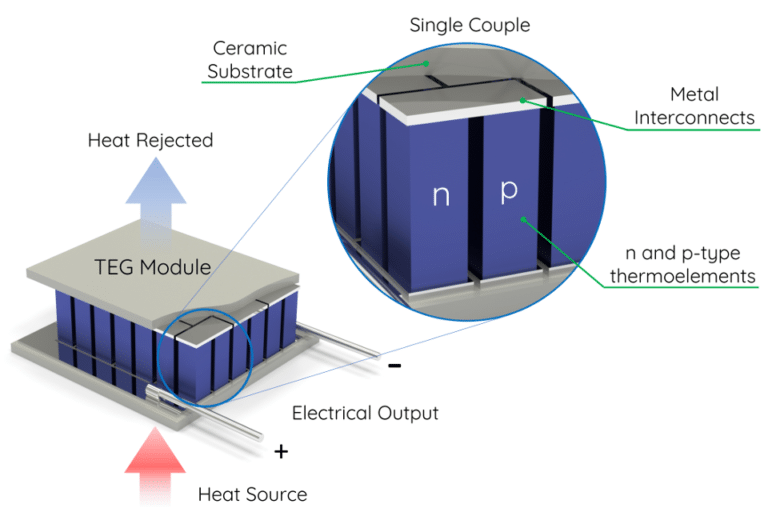
The basic building block of a thermoelectric generator is a thermocouple. A thermocouple is made up of one p-type semiconductor and one n-type semiconductor. The semiconductors are connected by a metal strip that connects them electrically in series. The semiconductors are also known as thermoelements, dice or pellets.
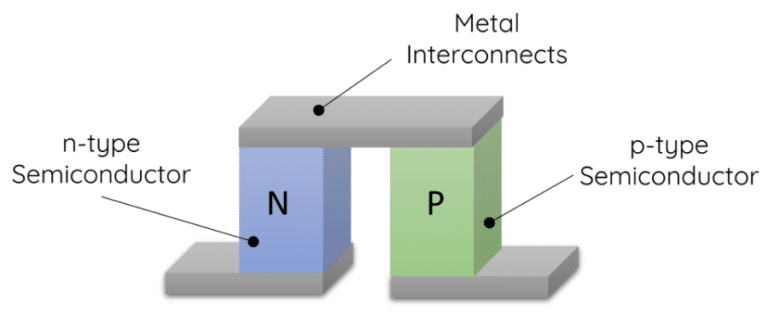
The Seebeck effect is a direct energy conversion of heat into a voltage potential. The Seebeck effect occurs due to the movement of charge carriers within the semiconductors. In doped n-type semiconductors, charge carriers are electrons and in doped p-type semiconductors, charge carriers are holes.
Charge carriers diffuse away from the hot side of the semiconductor. This diffusion leads to a buildup of charge carriers at one end. This buildup of charge creates a voltage potential that is directly proportional to the temperature difference across the semiconductor.

Semiconductor Materials used for Thermoelectric Generators
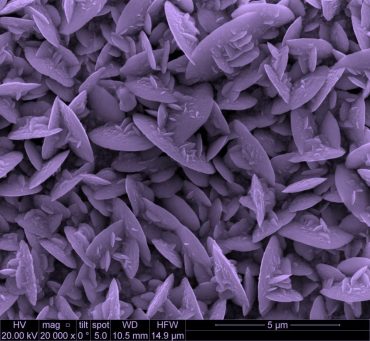
Three materials are commonly used for thermoelectric generators. These materials are bismuth (Bi2Te3) telluride, lead telluride (PbTe) and Silicon germanium (SiGe).
Which material is used depends on the characteristics of the heat source, cold sink and the design of the thermoelectric generator. Many thermoelectric generator materials are currently undergoing research but have not been commercialized.
What is a Thermoelectric Generator Module?
To create a thermoelectric generator module, many p-type and n-type couples are connected electrically in series and / or parallel to create the desired electrical current and voltage.
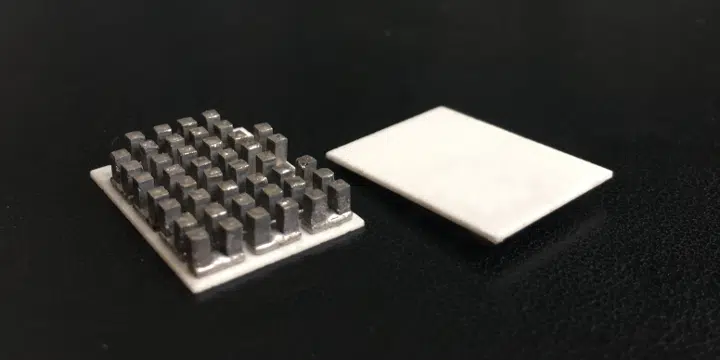
The couples are placed between two parallel ceramic plates. The plates provide structural rigidity, a flat surface for mounting and a dielectric layer to prevent electrical short circuits.
Video Demonstration of a Candle Powered Thermoelectric Generator
Who discovered the Seebeck Effect? When was the Seebeck Effect Discovered?
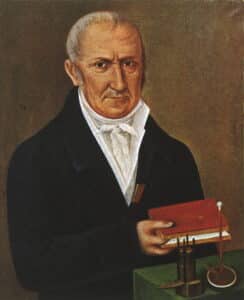
Until recently it was thought that Thomas Seebeck discovered what is known today as the Seebeck effect. It is now believed that Alessandro Volta discovered the Seebeck effect 27 years prior to Thomas Seebeck.
The discovery happened 224 years prior to this writing. In 1794, Alessandro Volta did experiments where he formed an iron rod into a u-shape. One end of the rod was heated by dipping it in boiling water. When the unevenly heated rod was electrically connected to a no longer living frog leg, a current was passed through the frog leg and the muscles contracted. This is believed to be the first demonstration of the Seebeck effect.
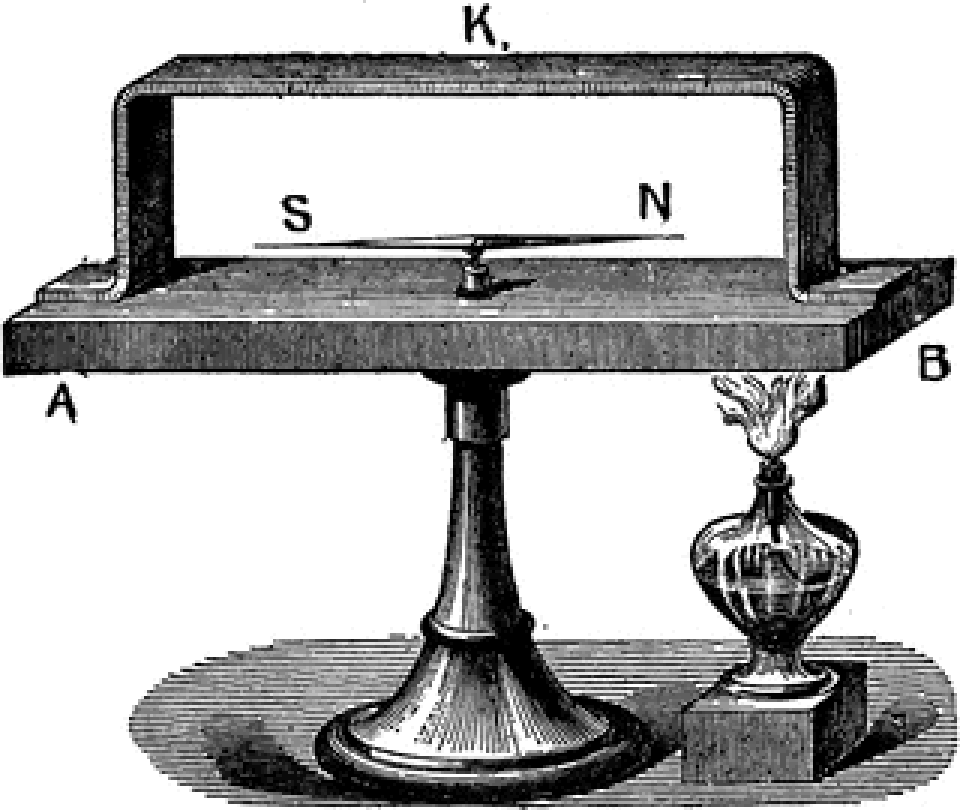
In 1821, Thomas Seebeck discovered when one of the junctions of two connected dissimilar metals was heated, a close proximity compass needle would rotate. Initially this was called the thermomagnetic effect.
Later it was found that a voltage and thus a current was induced by the junction heating. The current produced a magnetic field by Amperes law. This induced voltage due to junction heating became known as the Seebeck effect.

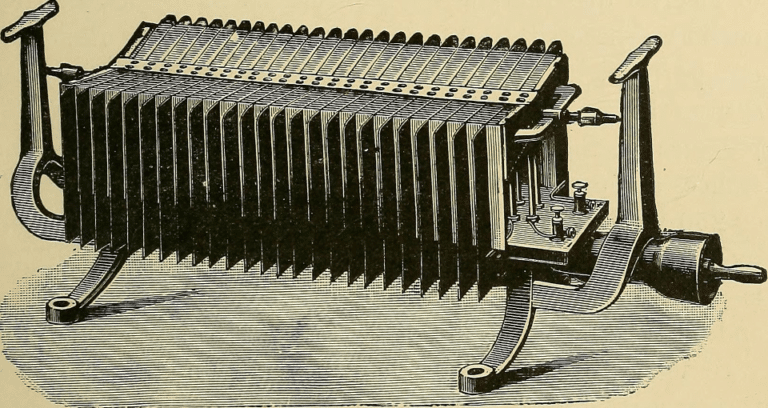
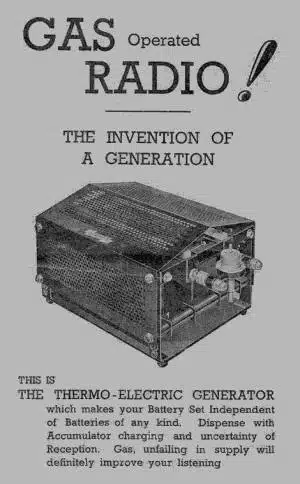
When was the First Thermoelectric Generator Developed?
Thermoelectric generators date back to the early 1800’s. Many different designs have been developed since.
What are the Advantages of Thermoelectric Generators
- Reliability – Thermoelectric generators are solid-state devices. Having no moving parts to break or wear out makes them very reliable. Thermoelectric generators can last a very long time. The Voyager 1 spacecraft thermoelectric generator, as of this writing, has been operational for 41 years. It has traveled over 13 billion miles without any maintenance or repairs.
- Quiet – Thermoelectric generators can be designed to be completely silent.
- No Greenhouse Gases – Thermoelectric generators do not require any greenhouse gases to operate. Some energy conversion technologies do.
- Wide Range of Fuel Sources – Thermoelectric generators do not have restrictions on fuels that can be used to generate the needed heat. Many other energy conversion technologies do.
- Scalability – Thermoelectric generators can be designed to output power levels smaller than microwatts and larger than kilowatts.
- Mountable in Any Orientation – Thermoelectric generators operate in any orientation. Some energy conversion technologies are sensitive to their orientation relative to gravity.
- Operation Under High and Zero G-forces – Thermoelectric generators can operate under zero-G or high-G conditions. Some other energy conversion technologies cannot.
- Direct Energy Conversion – Thermoelectric generators convert heat directly into electricity. Many energy conversion technologies require intermediate steps when converting heat to electricity. For example, heat energy from fuel is converted in a turbine to mechanical energy, then mechanical energy is converted to electricity in a generator. Each energy conversion step adds losses in the form of waste heat. This makes thermoelectric generators less mechanically complex than some other energy conversion technologies.
- Compact Size – Thermoelectric generators can be designed to be very compact. This leads to greater design flexibility.

What are the Disadvantages of Thermoelectric Generators?
The limitations of thermoelectric generators are less about the technology itself and more about application alignment and system-level design, including heat transfer, thermal interfaces, heat rejection, and electrical load matching.
Thermoelectric generators are less efficient than some of the other energy conversion technologies. This means that for the same amount of thermal energy (heat) input to the generator, less of that heat is converted to electricity.
For applications like waste heat recovery where the heat is free, this becomes less of a concern.
Thermoelectric generators can have a higher initial cost per watt of electrical power output than some energy conversion technologies for some applications. However, the lifetime cost per watt can be lower. Initial cost of a thermoelectric generator amortized over the long life of a thermoelectric generator can make the lifetime cost lower than other technologies, depending on the application.
No maintenance cost is another factor that lowers the lifetime cost of a thermoelectric generator.
There is a fair amount of thermoelectric generator module manufacturing knowledge. However, a disadvantage is, the design and engineering expertise required to effectively apply thermoelectric generators to an applications is rare. This Inhibits wider adoption due to applications that result in lower efficiency and high cost.
Despite the disadvantages, thermoelectric generators are still widely used because they have many advantages that other energy conversion technologies do not have.

What are the Applications of Thermoelectric Generators?
A wide range of thermoelectric generator applications exist. Thermoelectric generator applications can be categorized by the heat source that is utilized to generate electrical power.
Common Heat Sources for Thermoelectric Generators:
- Radioactive Decay
- Plutonium-238
- Waste Heat
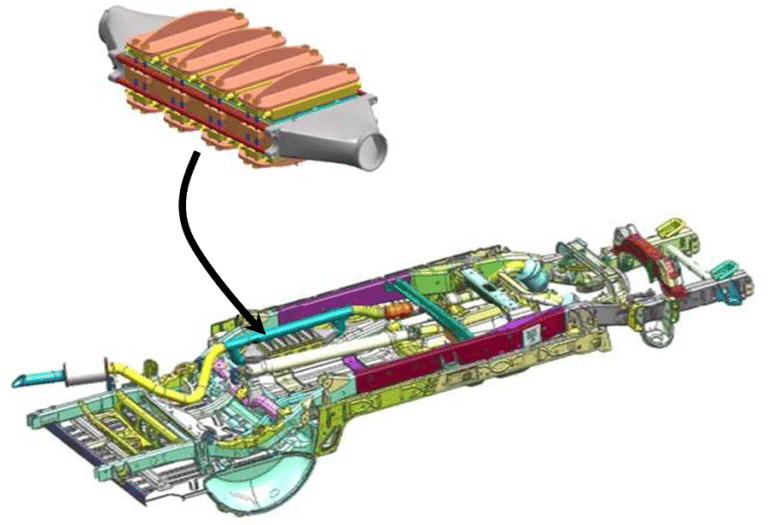
- Automotive exhaust
- Steel Foundries
- Wood Stoves
- Gas Flares
- Candles
- Hot Water Pipes
- Solar Photovoltaic Panels
- Electronics
- Battery Thermal Management
- Body Heat
- Renewable Sources
- Combustion
- Any Fuel Source, Internal or External Combustion
- Wireless Power Transfer
Categories of Thermoelectric Generator Applications
1. Extreme Environment
Thermoelectric generators are often used for applications where power is needed in an extreme environment.
Because thermoelectric generators have no moving parts, they are very reliable. This reliability makes thermoelectric generators a great application for places where it is too far, too expensive or too dangerous for a repair person to travel.
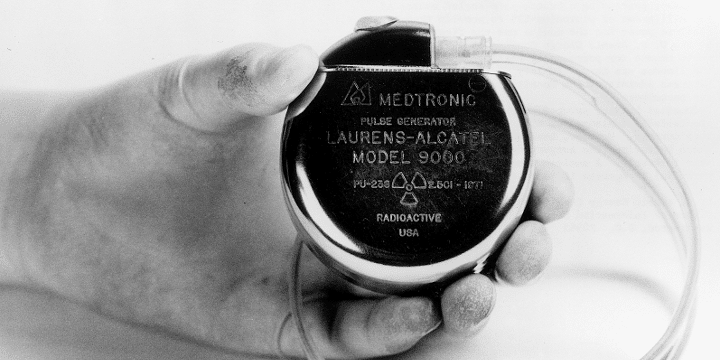
Sometimes these extreme applications utilize heat that is generated from a radiological source like Plutonium-238. These are referred to as radioisotope thermoelectric generators (RTG).
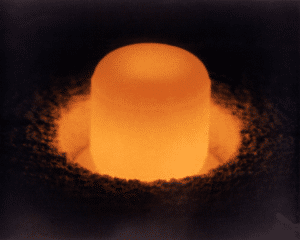
Some of these types of applications include spacecraft, mars rovers, Lunar power stations, power generation in Antarctica, flashing light buoy’s, lighthouses and nuclear pacemakers.
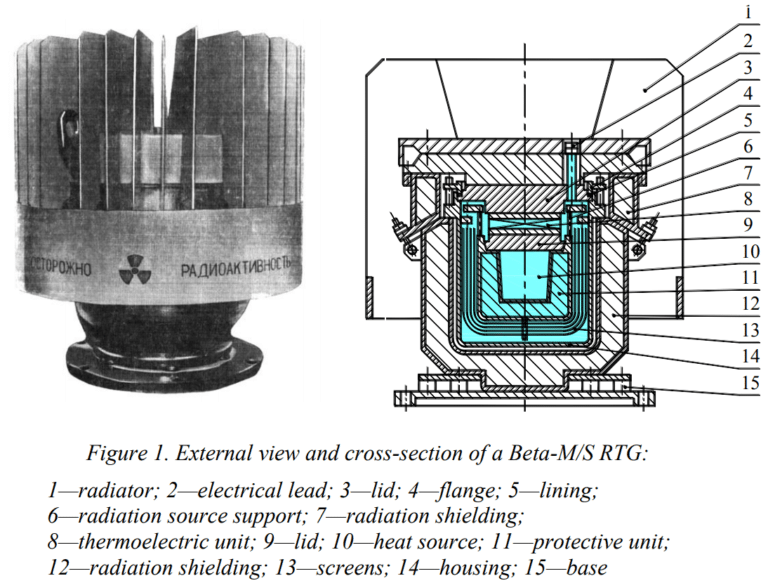
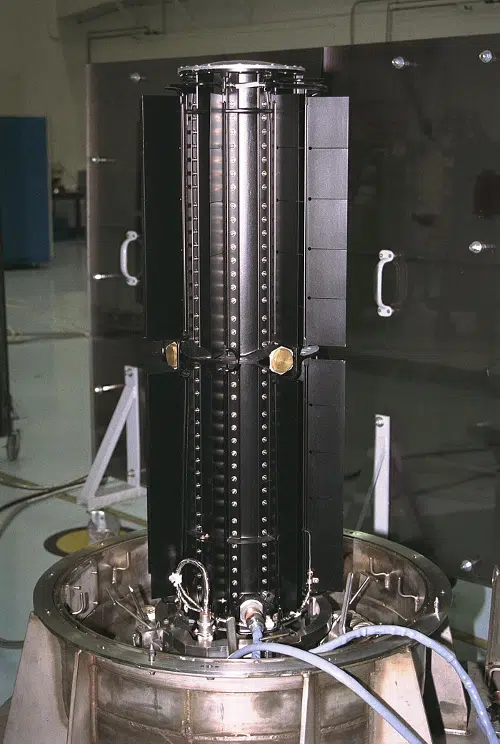

Some of these types of applications include spacecraft, mars rovers, Lunar power stations, power generation in Antarctica, flashing light buoy’s, lighthouses and nuclear pacemakers.
Other extreme environments where thermoelectric generators are used include, well heads, offshore platforms, pipelines (oil, gas, water), telecommunication sites and navigational aids. These applications typically use heat sources other than radiological.
2. Waste Heat Recovery
Waste heat is defined as heat lost to the environment. This heat is the byproduct of any energy conversion process.
Examples of energy conversion processes are, the conversion of chemical energy in gasoline to thermal energy and thermal energy to mechanical power in a combustion engine. Every time energy is converted to another form, heat is lost to the environment.
The use of fossil fuels results in up to 72% of fossil fuel energy being unutilized for any useful process. This heat is dispersed or wasted into the environment.


Recovering this waste heat makes any conversion process more efficient. This means less fuel is required to generate the same power output or the same amount of fuel will produce more power.
Thermoelectric generators have been used to recover and utilize waste heat from automotive exhaust, steel foundries, wood stoves, gas flares, candles, hot water pipes, solar photovoltaic panels and electronics.
3. Microgeneration for Sensor and Electronics
Microgeneration thermoelectric generator applications can be classified by a heat source that is very small, or the heat source is large with a very small temperature difference between the ambient and the heat source. Or where the thermoelectric generator itself is very small. This leads to microwatt or milliwatt thermoelectric generator power output levels.

Some applications include wireless sensor networks (WSN) for environmental monitoring, low power Internet of Things (IoT) applications, body heat powered wrist watches, body heat powered flashlights and body heat powered medical sensors.
4. Combined Heat and Power (CHP)
Combined heat and power, or CHP (also known as cogeneration) is the practice of generating power from a heat source and using waste heat from the energy conversion process to provide some type of heating for cooking, space heating or process preheating.
This leads to very high energy efficiency since most of the heat that would normally be wasted is utilized for a useful purpose.
Some examples of thermoelectric generator applications include biomass cooking stoves, camping stoves and grills.
5. Solar Thermal
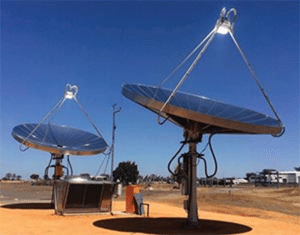
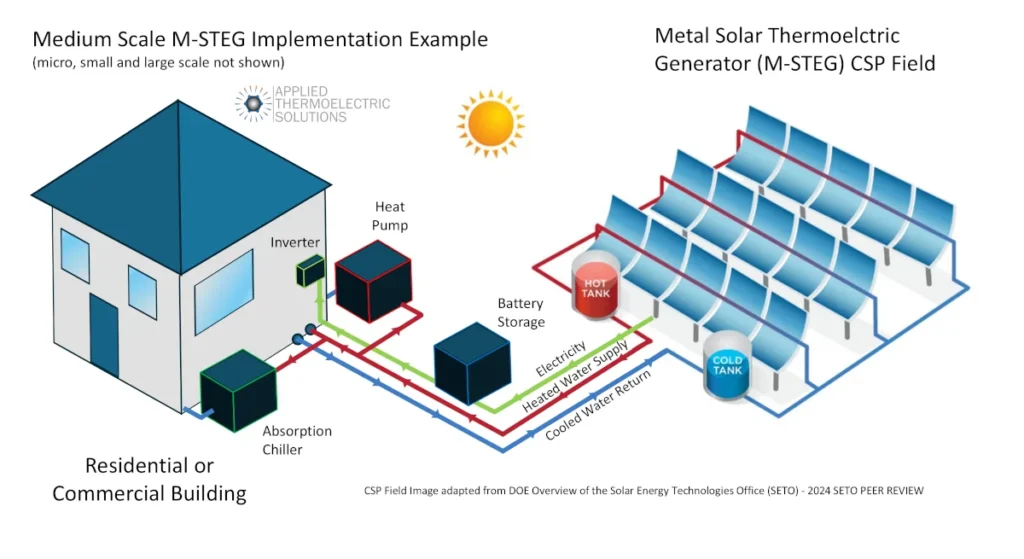
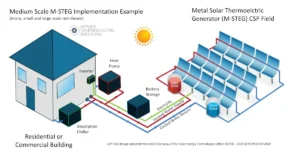
Solar thermal applications utilize solar energy that is concentrated onto a thermoelectric generator hot side at very high temperatures. The ambient air is used for the heat sink. The high temperature delta improves the energy conversion efficiency of the thermoelectric generator.
How much Power can a Thermoelectric Generator Produce?
TEG power output depends on temperature difference (ΔT), heat flow through the device, material performance, internal electrical resistance, and how well the electrical load is matched to the generator.
Thermoelectric generators are fully scalable from microwatts to kilowatts and beyond. The amount of power generated depends on the characteristics of the heat source, the cold sink and the design of the thermoelectric generator.


How are Thermoelectric Generators Designed for Real Applications?
Real thermoelectric generator designs require system-level optimization of heat transfer, electrical matching, and mechanical integration rather than off-the-shelf module selection.
Thermoelectric generator modules can be bought “off-the-shelf”. These modules are not designed for any specific application. Rather they are a “one-size fits all product. Theses thermoelectric modules look simple and easy to apply.
However, the simple looks can lead to very poor performance and high cost. Without a high level of application knowledge and engineering expertise, theses modules produce very little useful power output.
With some rules of thumb applied and an assembly of cobbled together parts, most hobbyists obtain a small electrical output from a thermoelectric generator.
However, for real commercial products and applications, engineered system level solutions are required. Without an engineered solution, many months or years of trial and error usually lead to a product that produces too little power and / or costs too much.
One tool that can be used to verify the design of a thermoelectric generator is modeling and simulation. Recent thermoelectric generator modeling research has significantly improved the accuracy and speed of thermoelectric generator modeling.
Advantages of Improved Thermoelectric Modeling and Simulation
Cost Savings
- Lower lifetime product or project cost – continuous prototype Iterations and tests are expensive
- Design problems out now Instead of fix later at very high cost
Huge Time Savings
- Reduced product development cycle
- Design by prototyping and testing is too time consuming
Makes Impossible Possible
- Investigate complex systems and interactions that are not linear or Intuitive
- Many product development tasks are cost and time prohibitive using prototypes and tests
Better Product Design
- More sales, repeat customers and better product reviews
Disadvantages of Improved Modeling and Simulation
The limitations of thermoelectric generators are less about the technology itself and more about application alignment and system-level design, including heat transfer, thermal interfaces, heat rejection, and electrical load matching.
- Available thermoelectric generator (TEG) modeling expertise not common
- Higher up-front cost but cost savings overall
- No standard approach. Every project is different
- A simulation cannot solve problems by Itself. Human Interpretation is required
Thermoelectric Engineering Services
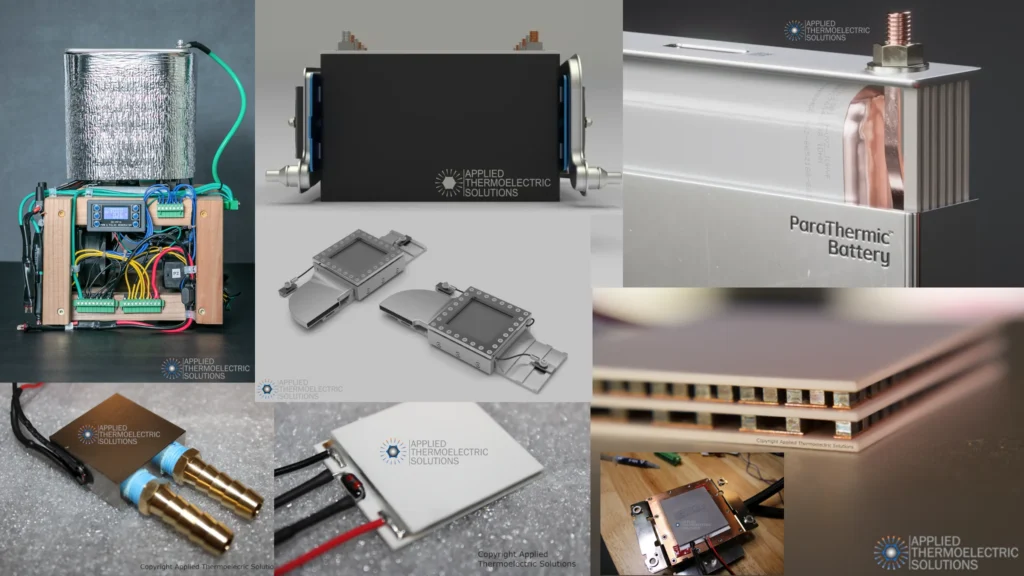
Applied Thermoelectric Solutions provides thermoelectric engineering, modeling, and R&D services supporting solid-state thermoelectric cooling, thermoelectric generator (TEG) systems, and heat-to-electric energy conversion.
Our work focuses on physics-based analysis, system-level modeling, and experimental validation to establish realistic performance limits, guide design decisions, and reduce technical risk when conventional approaches fall short.
Core service areas include:
Thermoelectric feasibility studies and system analysis
Physics-based thermoelectric and electrothermal modeling
Prototype development and performance validation
Advanced thermoelectric R&D and novel system architectures
Talk directly with an engineer to evaluate whether thermoelectric cooling is a viable fit for your application.
Frequently Asked Questions About Thermoelectric Generators (TEG)
How do thermoelectric generators work?
Thermoelectric generators work by converting heat flow and a temperature difference into electrical power using the Seebeck effect. When heat passes through p-type and n-type semiconductor elements, a voltage is generated that drives electrical current through a load.
What temperature difference is needed for a thermoelectric generator to produce power?
Any temperature difference across a thermoelectric generator will produce voltage and power. Usable power output generally increases with larger temperature differences up to a point. Whether the generated power is meaningful depends on application requirements, constraints, and overall system design.
How much power can a thermoelectric generator produce?
Thermoelectric generators are scalable from microwatts to kilowatts and beyond. Power output depends on temperature difference, heat flow, thermoelectric material properties, internal electrical resistance, and how well the electrical load is matched to the generator.
Why are thermoelectric generators considered low efficiency?
Thermoelectric generators are often described as low efficiency because their heat-to-electricity conversion efficiency is lower than that of many other power-generation technologies. However, efficiency alone is not sufficient to evaluate a technology’s suitability for a given application.
When meeting specific design requirements is the primary objective, efficiency is only one of several relevant criteria. Thermoelectric generators offer advantages that many alternative technologies do not, including high reliability with no required maintenance, silent operation, zero greenhouse gas emissions, scalability from microwatts to kilowatts, operation in any orientation, and the ability to function in high-g or zero-g environments.
When an application requires one or more of these characteristics, direct efficiency comparisons become less meaningful, and overall system performance and suitability become the dominant considerations.
Can thermoelectric generators be used for waste heat recovery?
Yes. Thermoelectric generators are well suited for waste heat recovery because they have no moving parts, require little maintenance, and can operate continuously. Common waste heat sources include automotive exhaust, industrial processes, gas flares, and electronic equipment.
What is the difference between a thermoelectric generator (TEG) and a thermoelectric cooler (TEC)?
A thermoelectric generator converts heat into electrical power using the Seebeck effect. A thermoelectric cooler uses electrical power to move heat using the Peltier effect. While the underlying semiconductor materials are similar, the operating mode and system design are different.
What limits thermoelectric generator performance in real systems?
Performance is usually limited by system-level factors rather than the thermoelectric materials alone. Key factors include heat transfer into and out of the generator, thermal interface resistance, heat rejection, electrical load matching, and overall system integration.
Are thermoelectric generators reliable for long-term operation?
Yes. Thermoelectric generators are solid-state devices with no moving parts, which makes them highly reliable. They are commonly used in applications requiring long service life and minimal maintenance, including space missions, remote monitoring systems, and harsh environments.
Can thermoelectric generators charge batteries?
Yes. Thermoelectric generators can charge batteries when the generated voltage and current are properly conditioned using power electronics. System design must account for variable temperature differences, load behavior, and charging requirements to ensure stable operation.
Are thermoelectric generators environmentally friendly?
Thermoelectric generators do not produce emissions during operation and can improve overall system efficiency by converting waste heat into useful power. Their environmental benefit depends on the heat source, system design, and how the generated power is ultimately used.
Using These Images in Your Work?
You are free to use our images on this page if we own them, as long as the required citations are provided.
However, please do not modify the images without contacting us.
Please cite any used image as follows:
Copyright Applied Thermoelectric Solutions LLC, “How Thermoelectric Generators Work”, https://thermoelectricsolutions.com/how-thermoelectric-generators-work/
Cite this Page:
Piggott, Alfred. “How Thermoelectric Generators Work.” Applied Thermoelectric Solutions LLC, https://thermoelectricsolutions.com/how-thermoelectric-generators-work
Resources
- Daniel Champier, Thermoelectric generators: A review of applications, In Energy Conversion and Management, Volume 140, 2017, Pages 167-181, ISSN 0196-890
- Growth of antimony bismuth telluride on silicon substrate using electrodeposition, Swatchith Lal, Devendraprakash Gautam and Kafil M. Razeeb, 27 November 2017
- G. Pastorino (PELTECH s.r.l., Calolziocort, Italy), Journal of Thermoelectricity No 1, 2009,
- Alessandro Giuseppe Antonio Anastasio Volta
- Thomas Seebeck, early 19th century, Hans Wahl, Anton Kippenberg: Goethe und seine Welt, Insel-Verlag, Leipzig 1932 S.204
- Image of First Demonstration of Seebeck Effect by Seebeck, Hawkins and Staff Hawkins Electrical Guide Number One (New York: Theo. Audel and Company, 1917) 95
- Thermoelectric Generator from 1901, Practical radiography: a handbook for physicians, surgeons, and other users of X-rays, Isenthal, A. W Ward, H. Snowden (Henry Snowden), 1865-1911
- Gas Powered Thermoelectric Generator from the 1930’s, John Howell., Douglas Self
- Nasa Voyager 1 Mission Status
- Thermoelectric Generator Module “© Science Photo, Adobe Stock”
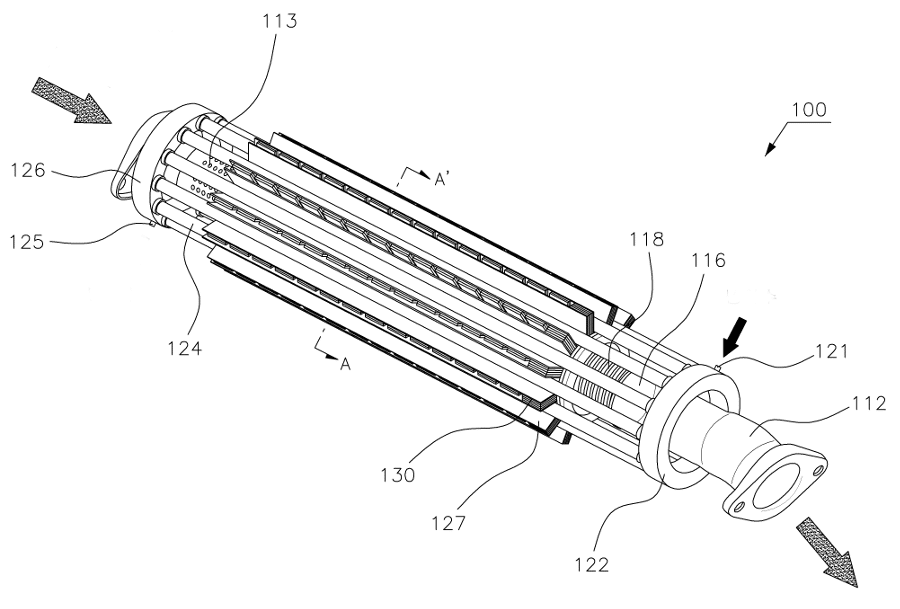
- Thermoelectric Generator Patent KR100986657B1, Chungbuk National University Industry-University Collaboration Foundation
- Plutonium-238 pellet under its own light, Department of Energy, 1997 (estimate)
- Antarctica Radiological Source, Removals – Complex, US-Russian Cooperative Effort, S. Porter July 14, 2015
- Cassini’s Radioisotope Thermoelectric Generator, 17 May 1997, Nasa Multimedia Gallery
- The Medtronic cardiac thermoelectric generator (RTG) pacemaker, U.S. Department of Energy, 14 January 2014, 13:02
- The RTG of Apollo 14’s ALSEP., NASA/Alan Shepard, 5 February 1971
- Power Plant Waste Heat “© jzehnder, Adobe Stock”
- Shell Oil refinery in Hemmingstedt, Dithmarschen, Germany in summer, Dirk Ingo Franke
- Body Heat Image “© anitalvdb, Adobe Stock”
- Body Heat Powered Medical Sensors
- Parabolic Solar Concentrator, Patrick550, 15 January 2016
- Hyundai Thermoelectric Generator Patent KR20130073411A
- Toyota Thermoelectric Generator Patent, JP2008042994A
Links that May Interest You
- How Thermoelectric Generators Work
- How Thermoelectric Cooling Works
- ParaThermic® Battery Thermal Management Technology
- VoltaTherm® Battery Thermal Management System (BTMS)
- PowerBeam™ Wireless Power Transfer Technology
- Our Thermoelectric Cooling and Thermoelectric Generator Work
- Our Thermoelectric Generator and Thermoelectric Cooling Services
- Our Thermoelectric and Advanced Thermal Technology
- Solar Thermoelectric Generator Case Study
- Thermoelectric Cooling Prototype Case Study
- Battery Thermal Management | Breaking the Physical Heat Limit
Did You Like This Post?
We would greatly appreciate it if you could leave a comment to let us know your thoughts on this post.
Your feedback and suggestions are highly valued and we welcome all comments and tips.
Thank you for taking the time to share your input with us.

28 Responses
Very interesting writing kept my interest from beginning to end. My son-inlaw Kevin is a mechanical engineer and I’m sure would be interested. He designs all automotive and aircraft for company’s like ford GM Chrysler Boeing and others.
Thank you, Barbara
Good introduction. I would like to understand the reasons for low efficiency and I would like to understand the temperature ranges and voltages. I would like to consider a natural gas generator for the home that would be replaced with cold fusion when it becomes available.
Thank you, Milo.
As materials get better efficiency will increase. However with the current set of available materials, the main driver of low efficiency is poor thermoelectric generator (TEG) and TEG system design. It is much easier to design a TEG that performs poorly than to design one that has great performance. Most TEG applications need to operate at their maximum efficiency but this is not to say that every application needs to have maximum available energy conversion efficiency when comparing every available energy conversion technology. As per the article, TEGs have many advantages that other energy conversion technologies do not have.
There are different materials to use depending on the application. Contact us for the best options. Contact Us
The voltage available depends on the constraints of the system. Unconstrained systems have unlimited voltage potential. It really depends on the needs of the application.
Thank for writing up this info. My son in 8th grade would like to do a science fair project experiment on thermoelectricity. Do you provide the needed materials on a small scale?
Yes, this is something we can help with. Please note we have a minimum per project fee listed on our contact page.
https://thermoelectricsolutions.com/contact/
This is a lucid explanation for the laymen and scientist. Very good, thanks.
Frying today! This could save the our planet from frying. A lot of waste heat about. … volcanoes, hot springs and above all hot countries could charge batteries. You need a someone with real imagination to make it work commercially.. Its the only variety of fruit a tree cant produce..
Thank you for the information.
Good luck
Jaya.
This is very nice, This is elaborated so properly
Thank you, Sankalp
Very interesting! Can i mention this work and use some images for my study?
Is the temperature difference time dependent? Does the temperature have to change very quickly for power to be generated or can the change be gradual?
Karissa,
Thank you for your interest. The temperature difference can be time dependent. Either the hot side can vary with time or the cold side or both. The power output will change depending on the point in time. The temperature changes can be very rapid or gradual.
See this paper regarding transient thermoelectric generators: https://thermoelectricsolutions.com/applied-thermoelectric-solutions-wins-editors-choice-award/
Amazing information! I am doing a project wherein I have a combination of a solar panel and a TEG module. By chance could you tell me what property of the solar panel makes the voltage drop for high temperatures?
Hi Naman, Electrical resistance is an inherent property of the solar panel materials. It can be calculated based on the resistivity of the solar panel materials and their geometry relative to the electrical current flowing through. You can characterize your specific materials by blocking light entry to the panel and measuring the electrical resistance at various temperatures of interest. I hope this helps. If you need more, please contact us through the contact form.
You should reword number 8 on the advantages of thermoelectric generators. Direct energy conversion makes it sound like heat is turned into electrical current. None of the heat is consumed or changed in the process. That is my understanding anyway.
I have seminar on topic thermoelectric power conversion ,so what should I explain?
Rohan,
What you present depends on the audience and the reason they are attending your seminar.
Perhaps you can use the information contained in this article for your presentation?
Some of the common questions that might help others understand thermoelectric generators are as follows:
How do Thermoelectric Generators Work?
How does a Thermoelectric Generator utilize the Seebeck Effect?
What Semiconductor Materials are used for Thermoelectric Generators?
Who discovered the Seebeck Effect?
When was the Seebeck Effect Discovered?
When was the First Thermoelectric Generator Developed?
What are the Advantages of Thermoelectric Generators?
What are the Disadvantages of Thermoelectric Generators?
What are the Applications of Thermoelectric Generators?
What are the Heat Sources for Thermoelectric Generators?
What are the applications of thermoelectric generators?
Does thermoelectric generator efficiency matter if efficiency is not needed?
How are Thermoelectric Generators Designed?
What are the advantages of Improved Modeling and Simulation?
What are the disadvantages of Improved Modeling and Simulation?
How much Power can a Thermoelectric Generator Produce?
What is the best material for thermoelectric generator?
How can we increase the efficiency of thermoelectric generator?
How long do thermoelectric generators last?
How much voltage can a thermoelectric generator produce?
How much temperature difference is needed for a thermoelectric generator?
Can thermoelectric generator charge battery?
Is thermoelectric generator eco friendly?
I need to buy one please…where can I get thermoelectric generators….am in Uganda Africa.
Please contact me on WhatsApp 256706559824….I would like to get in touch with the manufacturers or suppliers.
Katusiime, please contact us using our contact form. https://thermoelectricsolutions.com/contact/
We do not use WhatsApp/Facebook.
I need to buy one please…where can I get thermoelectric generators….am in Uganda Africa.
Please contact me on WhatsApp+256706559824….I would like to get in touch with the manufacturers or suppliers.
Katusiime, please contact us using our contact form. https://thermoelectricsolutions.com/contact/
We do not use WhatsApp/Facebook.
Could a Common Heat Source for a TEG be the heat coming off the back of a fridge?
Great question! Yes, the heat from the back of a fridge could indeed serve as a heat source for a thermoelectric generator (TEG). With thermoelectric generators, a temperature difference is needed, and the greater the temperature difference, the higher the efficiency of energy conversion from heat to electricity—working within the temperature limits of a particular thermoelectric material.
That said, while it certainly will generate power, the next questions to ask are: will it generate enough power for the application you have? If not, you could increase the number of thermoelectric modules to ensure you’re capturing more of the heat. Additionally, there would need to be consideration for how to capture the heat without significantly raising the temperature of the refrigerator’s condenser and compressor, which could impact both its lifespan and efficiency.
So, yes, this would generate power, but it depends on your power requirements as to whether it will generate enough, given the relatively low temperature difference. The design would need to reflect these factors.
We offer services to analyze and engineer solutions, and provide consulting to help you determine if this type of application is a good fit for your needs. Feel free to contact us for more information!
هل ممكن ان يكون مصدر الحراره المشترك لجهاز توليد الحراريه هو الحراره المهدره المنبعثه من الوح الشمسي
Can waste heat from a solar panel serve as a heat source for a thermoelectric generator?
Absolutely. We have experience using solar panel waste heat to power thermoelectric generators, which can improve the overall efficiency of solar energy capture. We would be happy to explore this further for your specific application and discuss potential thermoelectric system designs.