Custom Thermoelectric Solutions From Concept to Working System
From early concept to working thermoelectric system
Need more than an off-the-shelf thermoelectric module or standard cooling assembly?
Applied Thermoelectric Solutions helps engineering teams, founders, OEMs, and R&D organizations evaluate, design, prototype, and validate thermoelectric cooling, heating, power-generation, and thermal management systems.
You do not need a finished product specification before starting. We often help clients define the technical path, compare options, and determine whether thermoelectrics are the right fit before committing to hardware.
The goal is not just to choose a thermoelectric module. The goal is to develop a practical system that works in the real application.
Applied Thermoelectric Solutions provides thermoelectric engineering services. We do not sell standalone modules, kits, repair parts, or replacement components. We can help evaluate, select, specify, integrate, or troubleshoot thermoelectric modules when they are part of a complete system-design effort.
30+ years thermal systems experience | Specialized thermoelectric engineering | Not tied to one module supplier or brand | Prototype design and build | Validation testing
Is Applied Thermoelectric Solutions the Right Fit for Your Project?
Applied Thermoelectric Solutions is a good fit when you need engineering help with a thermoelectric system, not just a part number.
You may be a good fit if you need help with:
- Custom thermoelectric cooling, heating, or power-generation systems
- Thermoelectric feasibility analysis for a product, application, prototype, or early-stage concept
- A new concept, system architecture, or competing design approach that needs technical evaluation
- Independent review of an application that may be technically uncertain or difficult to solve with standard parts
- Peltier module selection, specification, or integration into a real system
- Troubleshooting an underperforming thermoelectric prototype or system
- Prototype design, build support, testing, modeling, or validation
- A practical path from concept, goal, or prototype limitation toward working hardware
We are not the right source for:
- Individual thermoelectric modules only
- Datasheets or catalog part selection only
- DIY kits
- Repair parts or replacement components
- Informal module questions without a defined commercial, product, prototype, or R&D project
Custom Thermoelectric Cooling and Power-Generation Applications
Applied Thermoelectric Solutions helps companies develop custom thermoelectric cooling systems, assemblies, and power-generation concepts where structured engineering and technical expertise are needed, and trial-and-error testing or catalog part selection alone are not enough.
We support applications where cooling or power-generation performance depends on the full system, including module selection or specification, heat rejection, thermal interfaces, controls, packaging, electrical requirements, condensation risk where relevant, reliability, manufacturability, and validation.
Thermoelectric Cooling Systems
Complete thermoelectric cooling system design support, including module selection or specification, heat exchangers, controls, power requirements, packaging, and performance modeling.
Custom Thermoelectric Assemblies
Custom thermoelectric assembly design support for applications where standard off-the-shelf assemblies do not meet cooling, performance, packaging, efficiency, or power-consumption requirements.
Electronics & Hotspot Cooling
System-level cooling support for electronics, localized hot spots, high heat flux regions, and compact devices where distributed or localized cooling is needed instead of cooling an entire enclosure.
Thermoelectric Refrigeration Engineering
Custom thermoelectric refrigeration engineering for compact cooling, controlled-temperature devices, and specialized cooling applications where conventional refrigeration may not be the right fit.
Lab & Instrument Cooling
Thermoelectric cooling and temperature-control support for laboratory equipment, instruments, sensors, and specialized test hardware that require controlled, localized cooling or custom capabilities beyond what is available off the shelf.
Laser, Optics & Imaging Cooling
Precision thermoelectric temperature-control support for lasers, optics, imaging systems, detectors, and other temperature-sensitive components.
Enclosure & Cabinet Cooling
Custom solid-state cooling concepts for sealed enclosures, cabinets, electronics housings, and systems where fans, vents, or liquid cooling may not be ideal.
Equipment-Level AI, GPU & Data Center Cooling Support
Targeted thermoelectric cooling support for AI hardware, GPU systems, edge devices, test hardware, and data-center equipment where localized hot spots, transient thermal spikes, or packaging constraints require custom analysis.
Thermoelectrics can be evaluated as a localized cooling layer to supplement bulk cooling, provide colder temperatures locaally, improve transient thermal response, or address thermal bottlenecks where conventional cooling approaches are not enough by themselves.
Thermoelectric Generator Concepts and Prototypes
Thermoelectric power-generation support for applications that use a temperature difference to produce electrical power, including feasibility review, module strategy, thermal architecture, power-output estimates, prototype design, build, testing, and validation.
Need help determining whether a custom thermoelectric cooling or power-generation system is practical for your application?
What Is a Custom Thermoelectric Solution in Product Development?
A custom thermoelectric solution is a cooling, heating, or power-generation approach developed around the real thermal goal, product direction, prototype limitation, application constraint, or operating environment.
It may begin with a fully defined product requirement, but it does not have to. Many projects start with a question: Can thermoelectrics solve this problem, what would the system need to look like, and what is the most practical path to working hardware?
A custom thermoelectric solution may include:
- A complete thermoelectric cooling or heating system
- A thermoelectric generator concept for power generation
- Module selection, comparison, specification, or integration
- A custom thermoelectric module when the application truly requires one
- Thermal architecture, controls, packaging, prototype design, build support, testing, and validation
In many projects, success depends less on finding a module and more on engineering the right thermoelectric system around the thermal load, heat rejection path, control strategy, space claim, power budget, reliability targets, cost targets, and manufacturing constraints.
That is where we focus.
Why Companies Come to Us for Custom Thermoelectric Solutions
Companies usually contact Applied Thermoelectric Solutions when they need more than component sourcing. They may not yet know whether thermoelectrics are the right answer, what requirements matter most, which module approach makes sense, or how to move from concept to working hardware.
We help determine whether thermoelectrics make sense, what architecture is most practical, what risks need to be resolved early, and how to reduce development uncertainty before committing to the wrong hardware path.
Typical reasons include:
- Precise temperature control at the point of use
- Compact cooling or heating in space-constrained products
- Solid-state operation with no refrigerant at the point of use
- Quiet operation and low vibration at the active thermal device
- Simultaneous heating and cooling capability from the same platform
- Specialty products where conventional cooling is too bulky, too noisy, or poorly controlled
- A need to translate an early concept, thermal goal, or prototype limitation into a practical development path
- A need to compare module, assembly, and full-system options before choosing a development path
Custom thermoelectric solutions are usually system problems, not module-only problems
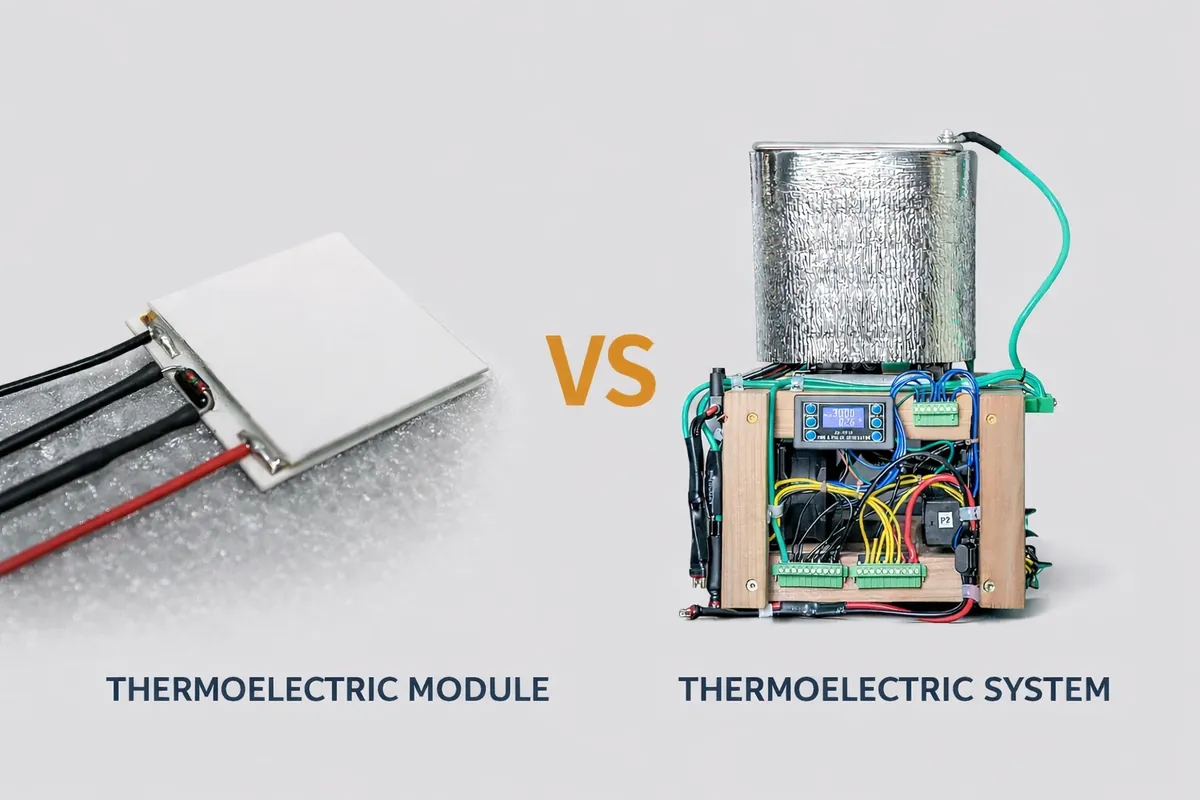
A thermoelectric module is important, but it is only one part of a successful product.
A commercially viable thermoelectric product usually depends on the full system, including:
- Heat sinks, heat exchangers, cold plates, or liquid cooling hardware
- Interface materials and thermal path design
- Sensors, thermistors, power electronics, and controls
- Structural packaging and mounting strategy
- Airflow, liquid flow, and condensation management where required
- System optimization for size, performance, efficiency, cost, and reliability
This is why many projects struggle when the effort starts and stops with module shopping. A strong thermoelectric solution is built by engineering the whole thermal system, not by forcing the application to fit a module or semi-custom assembly.
Choosing the Right Thermoelectric Path
A standard thermoelectric module or semi-custom assembly can be the right choice when the application is straightforward and an available product format meets the performance, size, electrical, and integration needs.
Other projects require more than selecting a module, heat sink, fan, or standard assembly. Performance may depend on the full thermal path, heat rejection, electrical operating point, controls, packaging, condensation risk, reliability, cost, and validation requirements.
Applied Thermoelectric Solutions helps evaluate the full system and define the most practical path. That may mean using a standard module, modifying an assembly approach, selecting across suppliers, developing a custom module, or engineering a more complete thermoelectric system architecture.
The goal is not to force the application into a catalog product. The goal is to define a thermoelectric approach that fits the real system requirements.
What we can help you develop
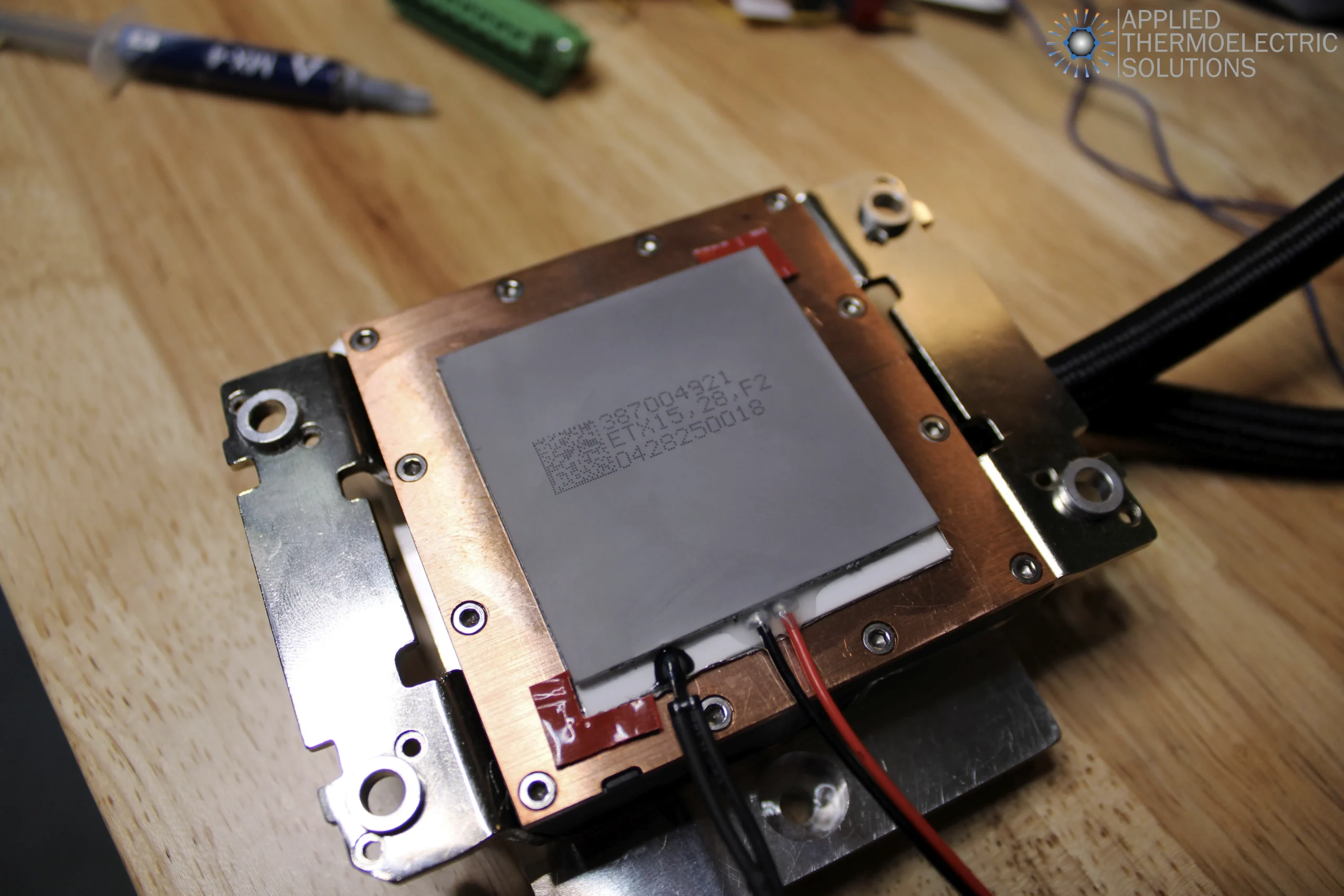
We support custom thermoelectric development across cooling, heating, and power-generation applications, from early feasibility through prototype hardware, testing, and validation.
Custom Thermoelectric Cooling Systems
We help develop solid-state cooling solutions for products that need localized cooling, compact integration, tight temperature control, or operation where conventional vapor-compression hardware is not practical.
For applications with short-duration heat loads, localized hot spots, or brief peak cooling requirements, Applied Thermoelectric Solutions can also evaluate whether transient thermoelectric pulse cooling is a practical way to create additional short-duration cooling without moving to a more complex thermoelectric architecture.
Thermoelectric Heating and Cooling Systems
Some applications need both cooling and heating, controlled from one compact solid-state platform. Thermoelectrics can be especially valuable when reversible temperature control is important.
Thermoelectric Generator Concepts and Prototypes
For products or systems that can benefit from solid-state power generation from a temperature difference, we support thermoelectric generator evaluation, design direction, prototype design, build, testing, and validation.
Custom Thermoelectric Modules, When Justified
Not every project needs a custom or optimized module. In many cases, an off-the-shelf module is the best path because it can reduce cost, shorten lead time, and lower development risk.
When standard modules do not fit the thermal, electrical, geometric, or environmental requirements, a custom thermoelectric module may be the right solution.
The key is making that decision for sound engineering reasons, not because a custom part sounds more advanced.
Case Studies and Technology Examples
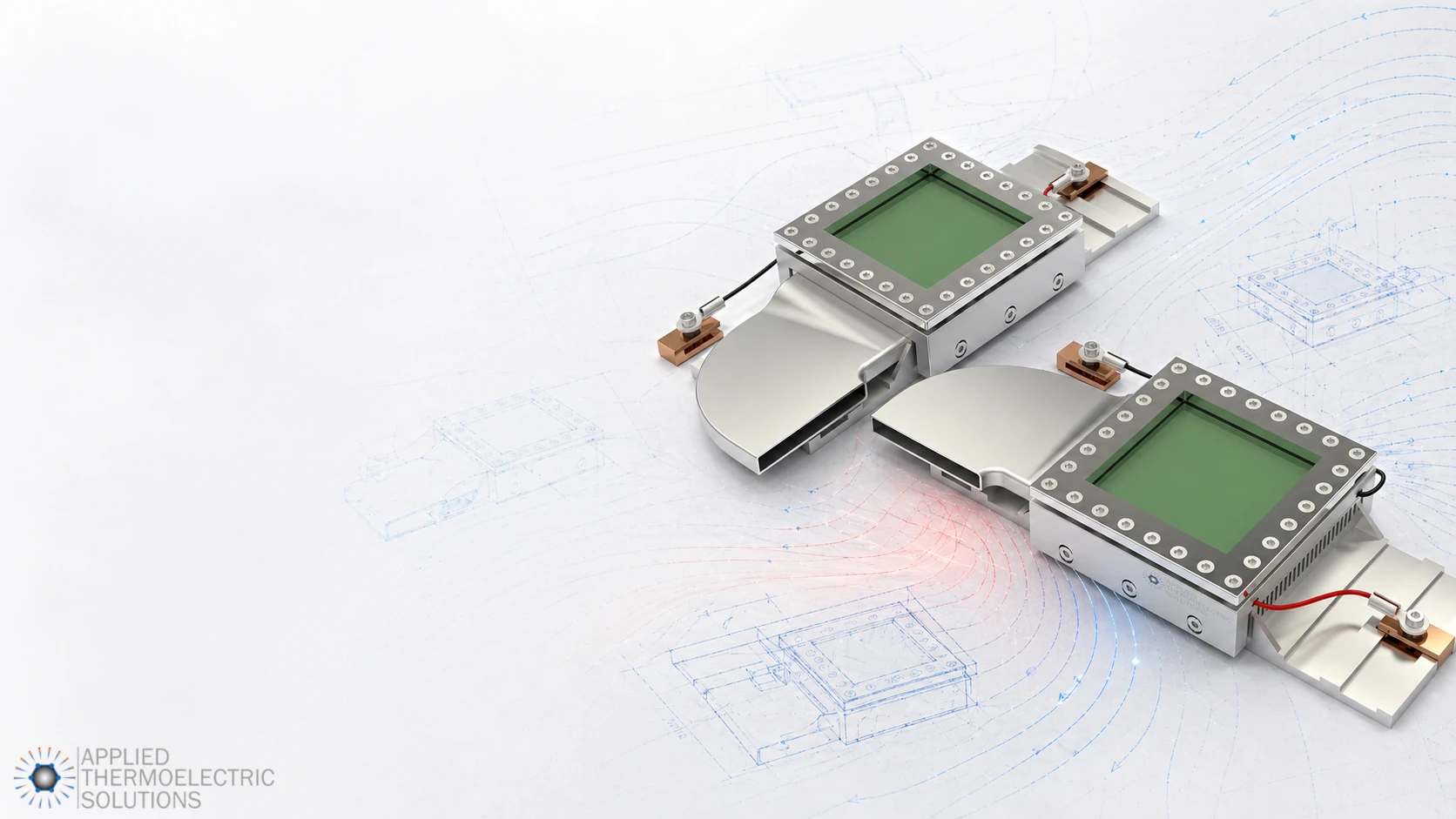
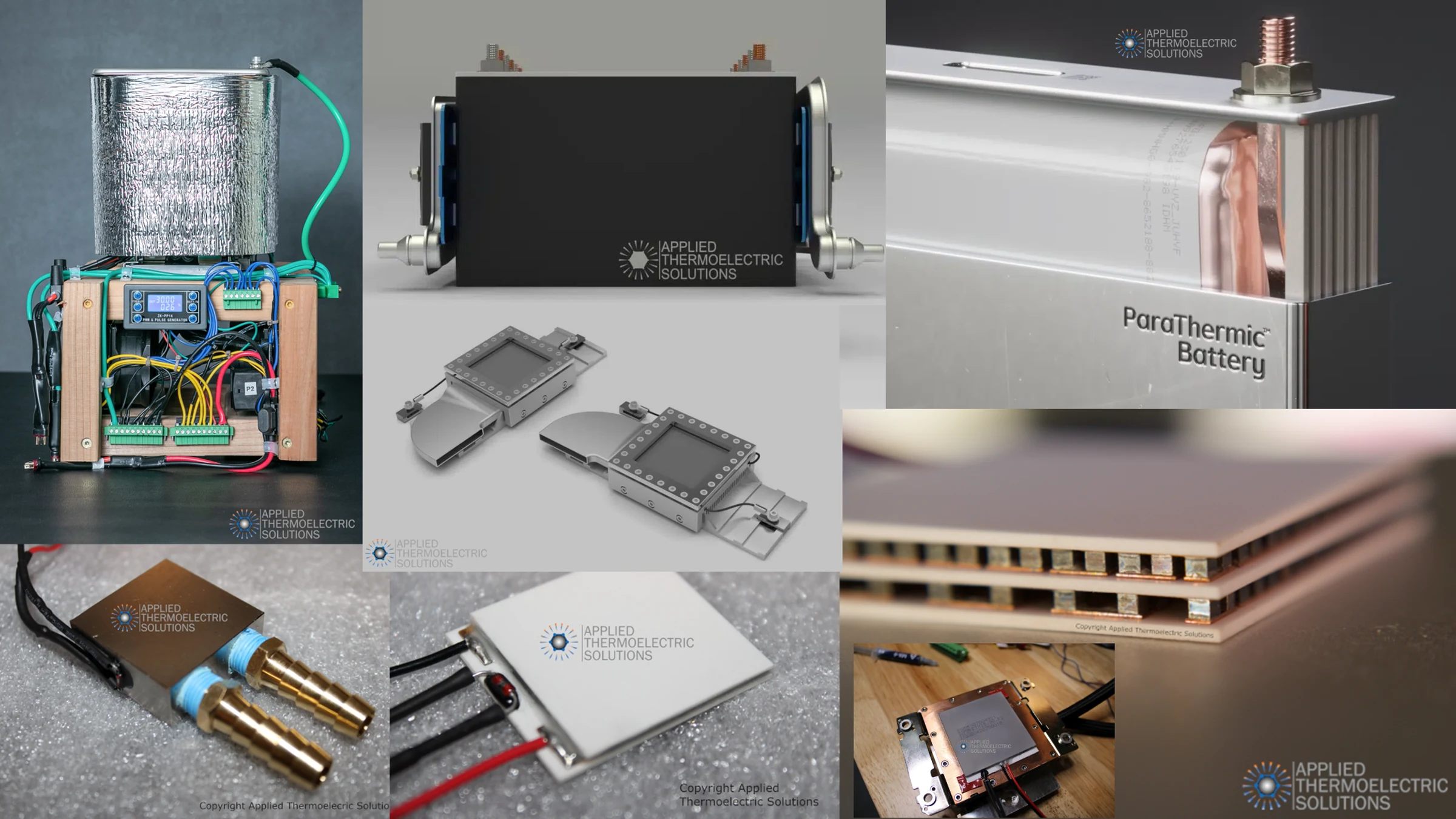
Thermoelectric Cooling System Prototype
System-level thermoelectric cooling design, modeling, prototype development, and validation for a demanding cooling application.
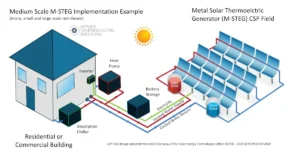
Solar Thermoelectric Generator Feasibility Study
System-level feasibility and commercial evaluation of a metallic solar thermoelectric generator concept.
ATS-Developed Technology Examples
These are not client case studies, but they show the type of first-of-its-kind thermoelectric and thermal system work Applied Thermoelectric Solutions develops.
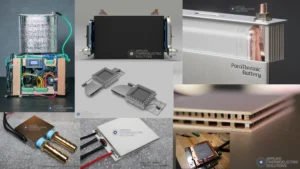
- ParaThermic® High-Heat-Transfer Battery Architecture
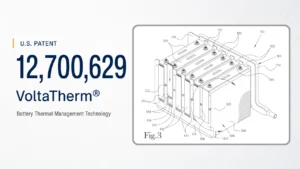
- VoltaTherm® Thermoelectric Battery Thermal Management System
- PowerBeam™ TEG-Based Wireless Power Transfer System
Off-the-shelf module or custom module?
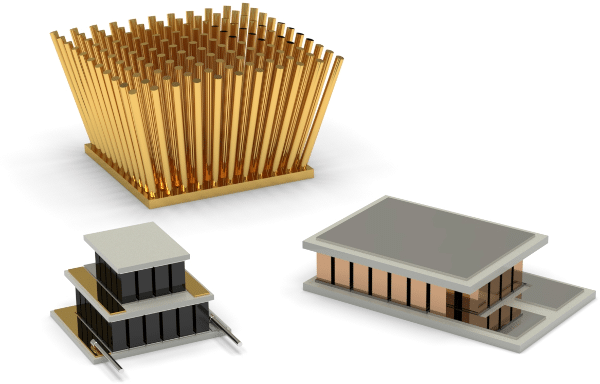
One of the most important early decisions is whether the project should use a standard thermoelectric module or pursue a custom design.
The right answer depends on the system, not on assuming a custom part is always better.
Applied Thermoelectric Solutions is not tied to one module supplier or brand. That matters because the best thermoelectric module depends on the full system, not just the datasheet. We can compare module options across suppliers to help balance cooling capacity, temperature difference, voltage, current, size, cost, availability, reliability, and integration constraints.
Off-the-Shelf Modules Are Often the Right Starting Point
Standard modules can be a strong choice when they already meet the application requirements for:
- Cooling or heating capacity
- Current and voltage
- Size and thickness
- Operating temperature range
- Durability and availability
They can reduce cost, shorten development time, and lower technical risk.
Custom Modules Are Appropriate When the Product Requirements Demand Them
A custom thermoelectric module may make sense when the application requires changes such as:
- non-standard footprint or thickness
- different internal semiconductor geometry or count
- specialized electrical characteristics
- unusual shape or packaging requirements
- special metallization or integration needs
The key is making that decision for sound engineering reasons, not because a custom part sounds more advanced.
Our thermoelectric product development process
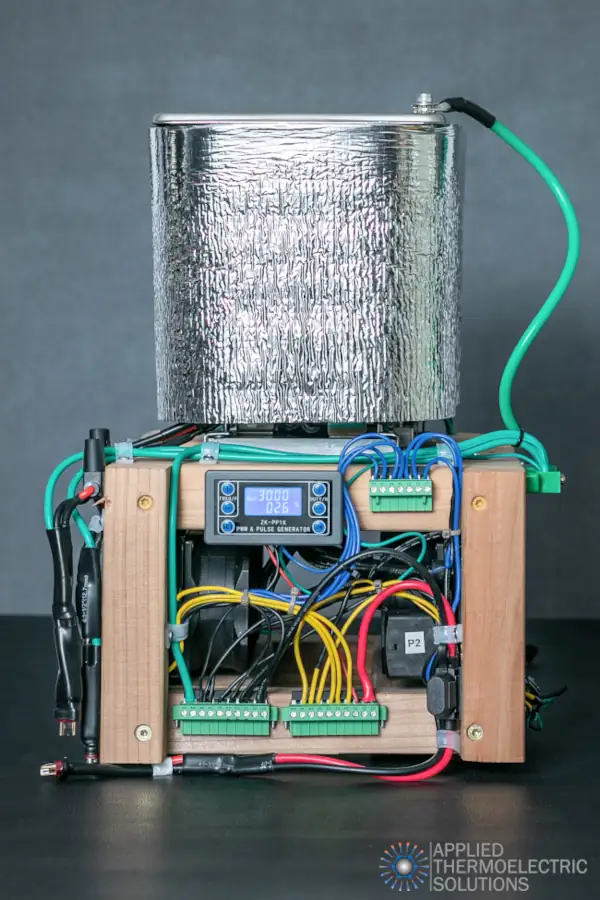
We use a practical, staged process intended to reduce risk and improve decision quality. This process helps clients move from concept to prototype hardware with fewer avoidable design mistakes.
1. Requirement Definition
We start by understanding the thermal problem, product goal, early concept, operating environment, heat load, control needs, packaging constraints, reliability needs, and commercial priorities. This helps define the requirements that matter instead of assuming they are already complete.
2. Feasibility and Architecture
We evaluate whether thermoelectrics are a strong fit and what type of system architecture is most promising. This step helps prevent expensive development down the wrong path.
3. Modeling and Simulation
We use engineering analysis and modeling to evaluate performance, compare configurations, and identify the main design tradeoffs before building hardware.
4. System and Module Strategy
We determine the right balance between system design, module selection, supplier options, electrical requirements, heat rejection, controls, packaging, and any custom module needs.
The module strategy is based on the system requirements, not on one supplier’s catalog. This can open more options for performance, size, voltage, current, cost, availability, features, and integration.
5. Prototype Development
We help translate the concept into prototype hardware that can be built, instrumented, tested, and evaluated against real requirements.
6. Validation and Refinement
We evaluate performance, identify design changes, and improve the solution for the next stage of development.
Why work with Applied Thermoelectric Solutions
Applied Thermoelectric Solutions is not positioned as a parts catalog. We are an engineering partner focused on helping you evaluate, design, prototype, and validate thermoelectric solutions that work in real applications.
That distinction matters when performance depends on more than the module itself.
System-level thinking:
We engineer the thermal solution as a complete system, not just a module selection exercise.
Module selection based on the system, not one supplier catalog:
We can evaluate module options based on the application instead of forcing the design around one supplier’s catalog. This helps balance performance, cost, size, voltage, current, availability, and integration requirements.
Application-driven development:
The design starts with your product, application, performance target, and constraints. It does not start with a generic datasheet.
Modeling before costly trial-and-error prototyping:
We use feasibility work, analysis, and staged development to reduce avoidable prototype failures.
Thermoelectric depth:
We bring specialized thermoelectric knowledge to cooling, heating, and power-generation applications.
Prototype design, build, and testing:
We help move promising concepts into real hardware that can be tested against actual requirements.
Innovation services:
For difficult applications, we can help develop new system architectures, concepts, and technical paths when standard approaches are not enough.
Applications we support
Custom thermoelectric solutions can be relevant across a wide range of product categories, including:
- Consumer and specialty electronics
- Portable and compact instruments
- Medical and diagnostic devices
- Industrial and scientific equipment
- Battery-related thermal management applications
- Sensing, monitoring, and specialty power-generation concepts
When to talk with us
You do not need every requirement finalized before contacting us. In many projects, part of the value is helping define the right technical questions before hardware decisions are made.
You may be a good fit to work with us if you are asking questions such as:
- Can thermoelectrics solve this cooling, heating, or power-generation problem better than conventional hardware?
- Do we need a complete thermoelectric system or just a module?
- Can an off-the-shelf module work, or do we need a custom thermoelectric module?
- What would a credible prototype path look like?
- Can this concept be modeled before we commit to hardware?
- How do we reduce development risk and avoid building the wrong prototype?
- Is this idea technically practical, or should we consider another approach?
Client Perspective
“Applied Thermoelectric Solutions helped move our concept for metallic solar thermoelectric generators from an idea to a practical evaluation. They helped frame the right technical and economic questions, assess material costs and system-level performance, and identify realistic pathways toward prototype development and external funding.
Their ability to integrate engineering analysis with commercial considerations was essential in advancing the project.”
— Diane Mero, Founder & CEO, STEMero
Start Your Thermoelectric Solution Development
Need help evaluating, designing, building, testing, or troubleshooting a thermoelectric system for a product, application, prototype, or new idea?
Applied Thermoelectric Solutions can help clarify the thermal challenge, performance targets, module strategy, system architecture, prototype path, and validation needs.
Let’s discuss whether thermoelectrics are practical for your application and what path makes sense from concept, goal, prototype issue, or product requirement to working hardware.
Frequently Asked Custom Thermoelectric Questions
What is a custom thermoelectric solution?
A custom thermoelectric solution is a thermoelectric cooling, heating, or power-generation approach developed for a specific product, application, prototype, or early-stage concept rather than treated as a generic component purchase.
It may include module selection, thermal architecture, heat rejection, controls, packaging, prototype design, testing, and validation.
Do I need a finished product specification before contacting Applied Thermoelectric Solutions?
No. Many projects begin with an early concept, product goal, prototype limitation, thermal problem, performance target, or partially defined requirement. Applied Thermoelectric Solutions can help define the technical path and determine whether thermoelectrics are practical before hardware is built.
Do I need a custom thermoelectric module?
Not always. Many projects are better served by a standard thermoelectric module selected and integrated properly.
A custom module may make sense when standard modules cannot meet the required size, voltage, current, geometry, temperature range, durability, or integration requirements. Applied Thermoelectric Solutions can help evaluate whether a standard module, custom module, or different system architecture is the better path.
Do you sell thermoelectric modules?
Applied Thermoelectric Solutions is primarily an engineering and development company, not a module distributor. We can help select and integrate modules from appropriate suppliers when the project requires it.
Do you help with prototypes?
Yes. Applied Thermoelectric Solutions can help with thermoelectric prototype development, including concept review, system design, modeling, prototype build, test planning, performance testing, and validation. The exact scope depends on the application, project goals, and development stage.
Do you only work on cooling?
No. We support thermoelectric cooling, heating, temperature control, and power-generation applications. We also work on related thermal management problems where thermoelectrics may be part of a broader system solution.
Do thermoelectrics work best as standalone parts?
Usually not. A thermoelectric module performs best when it is integrated into a complete system with the right heat rejection, cold-side thermal path, interfaces, power electronics, controls, packaging, and operating strategy.
Links that May Interest You
- Custom Thermoelectric Solutions
- Thermoelectric Design and Simulation Services
- Thermoelectric System Development
- Our Thermoelectric Cooling and Generator Work
- Thermoelectric Cooling Prototype Case Study
- Solar Thermoelectric Generator Case Study
- How Thermoelectric Cooling Works
- How Thermoelectric Generators Work
- ParaThermic® Battery Thermal Management Technology
- VoltaTherm® Battery Thermal Management System (BTMS)
- PowerBeam™ Wireless Power Transfer Technology
- Battery Thermal Management | After Immersion Cooling